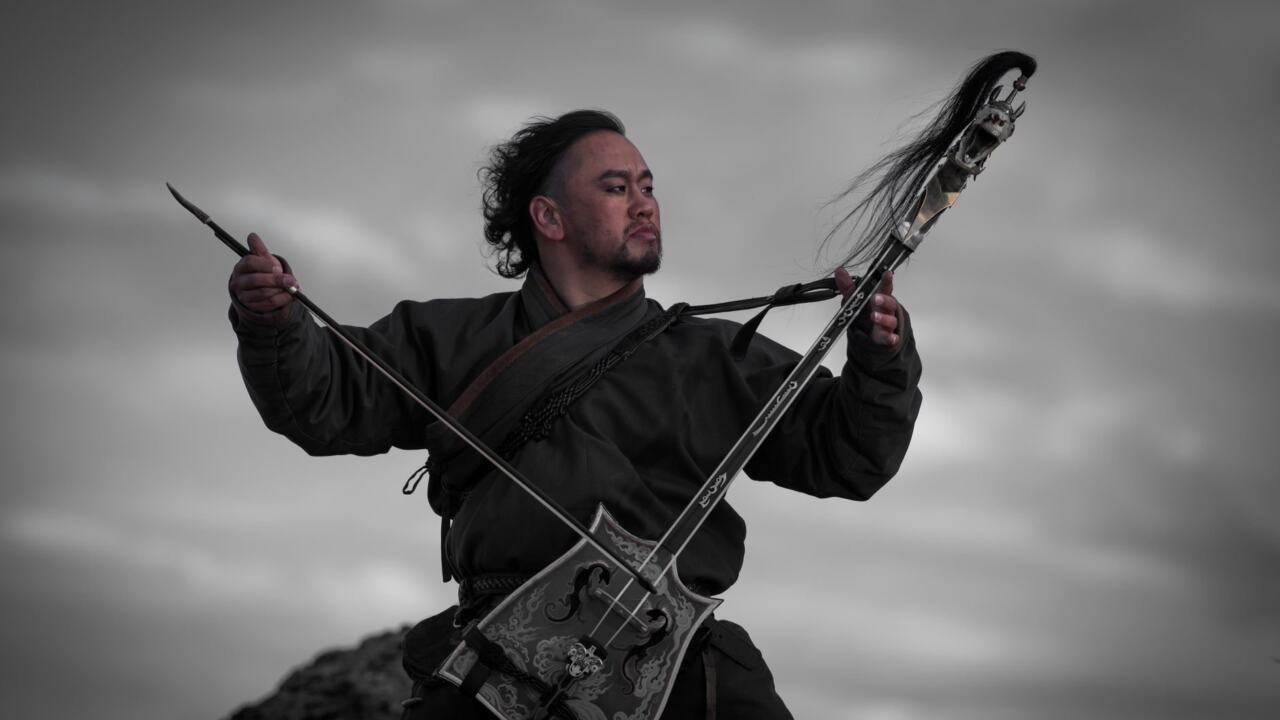
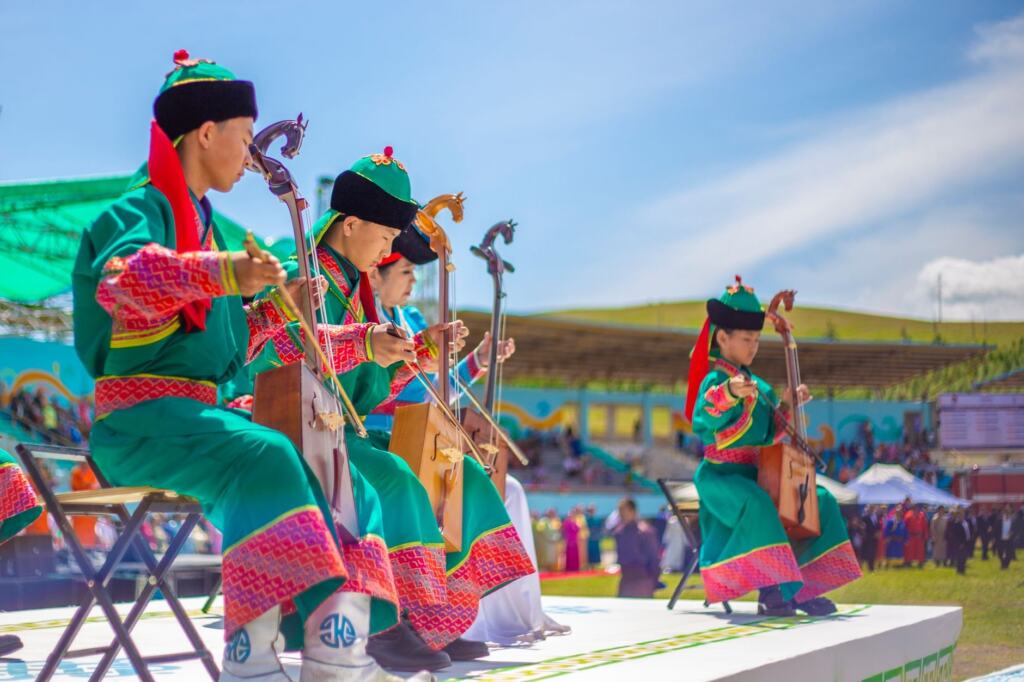
The morin khuur horsehead fiddle is a two-stringed bowed instrument developed by nomadic Mongols and named for the horse-head carving at the top of its neck. Its strings and bow are made from horsehair, and it is held nearly upright when played.
The fiddle belongs to the wider world of mongolian nomadic culture. This guide treats it as an object: how it is built, what its parts symbolise, the legend of Suho, why UNESCO listed it and how a newcomer might begin learning.
What the morin khuur is and how it sounds
UNESCO’s intangible heritage record describes the morin khuur as a unique two-stringed instrument developed by nomadic Mongols. The name refers to the ornamental horse-head carving at the top of its neck. A separate instrument overview calls it the national instrument of Mongolia.
The sound depends heavily on the bow. The bow hair is strung loosely, and the player uses an underhand grip so that the hand can tighten the hair while playing. That gives fine control over timbre. A listener should expect a tone shaped continuously by the bowing hand rather than by a fixed setting.
The repertoire links the sound to the animal that gives the instrument its name. In the same overview, music attributed to the legend of Suho describes a horse’s neighing, its steps, and its trotting and cantering. Much of the music is therefore more descriptive than abstract.
How a morin khuur is made
A morin khuur is assembled from a small number of parts, and each one has a distinct job. The stages below follow the order in which the instrument takes shape, as described in the instrument overview.
- Shape the sound box. The body is a trapeziform, wooden-framed sound box to which the two strings are attached. The trapezoid outline is the clearest way to recognise the instrument from the side.
- Carve the neck and scroll. The strings run up to two tuning pegs set in the scroll, which is usually carved into the form of a horse’s head. The word “usually” matters: the horse’s head is the norm and gives the instrument its name, but it is not an absolute rule.
- Fit the strings. UNESCO’s record states that the strings of both the bow and the fiddle are made from the hair of a horse’s tail. The overview adds that instruments may be strung with nylon or horsetail.
- Prepare the bow. The bow is loosely strung with horsehair coated with larch or cedar wood resin. The loose stringing is what the underhand grip works against.
For anyone comparing instruments, the two features worth checking are the body shape and the carved scroll with its two pegs. The string material is a separate choice. Horsehair is the traditional material recorded by UNESCO, while nylon is a documented alternative.
Horsehair strings, bow and the meaning of two strings
Horsehair connects the instrument physically to the horse. UNESCO’s record says both fiddle strings and bow hair come from a horse’s tail, so the sound is produced by hair drawn across hair. That construction supports the instrument’s symbolism better than any decoration does.
The documented symbolism attaches to the horse as a whole rather than to each string separately. The carved head gives the name, the tail hair gives the strings and bow, and the melodies imitate the horse’s neighing and gaits. Anyone asked what the two strings represent can answer accurately that the instrument is built to evoke a horse, with the strings made from its hair.
The bow resin is a practical detail. Larch or cedar resin coats the hair, which is strung loosely. That is why a beginner should expect to spend time on how the bow hair is tightened by hand, not only on where the fingers go.
The legend of Suho and the white horse
The best-known origin story concerns Suho and his horse. In the version summarised in UNESCO’s record, the horse dies and Suho hears what sounds like music made by the wind through the horse’s mane and tail. The instrument is the way that sound was carried on.
The story explains three features of the object at once. The scroll is a horse’s head, the strings are hair from a horse’s tail, and the music describes a horse’s neighing, steps, trotting and cantering. The instrument overview reports that the melodies describe these sounds and gaits.
Legends such as this are best read as cultural explanation, not as a documented origin. The historical record is more modest. According to the overview, Tan Dynasty records mention a fiddle of the Huns, who lived in Mongolian territory, and the diary of the French missionary Guillaume de Roubruck, who visited Mongolia between 1253-1255, also describes the instrument. The story and the written record support each other without being the same thing.
UNESCO listing and the instrument’s place in Mongolian life
UNESCO inscribed “Mongolian Traditional Music of the Morin Khuur” as a Masterpiece of the Oral and Intangible Heritage of Humanity in 2003. The listing recognises a living practice, not only an object. The record notes a tradition of playing the morin khuur at all ritual and ceremonial events.
The same record places the instrument inside a wider respect for the horse. Mongols honour it in their national values and symbols, including flags and emblems, as well as in folk songs. The fiddle’s form is one expression of that respect. For another strand of ceremonial life, see the guide to ovoo mongolia, the sacred stone cairns.
The instrument also has working uses. The overview reports that Mongolian camel farmers use melodies based on the morin khuur, alongside special low harmonic songs, to calm stressed mother camels. Readers who want the herding routine behind this practice can follow how do nomads live in the gobi desert in a separate guide.
Learning to play the morin khuur
A newcomer starts with posture. The instrument is held nearly upright, with the sound box in the player’s lap or between the legs. It is not tucked under the chin, so habits from violin playing do not transfer directly.
The second early task is the bow. Because the hair is loose and the grip is underhand, the hand controls both bow tension and timbre. Practising that grip with the instrument braced steadily comes before any attempt at melodies that imitate a horse’s gaits.
For community and motivation, the overview mentions a biannual International Morin Huur Festival and competition, first held in 2008. It shows that the instrument has an active performing community, which matters when looking for a teacher or a recorded repertoire to follow. Learning from a player who holds the instrument in the traditional way is the safest route, since position and bow technique are the features that set it apart.
Frequently asked questions
Is the morin khuur the national instrument of Mongolia?
Yes. An instrument overview describes it as the national instrument of Mongolia.
What are the strings and bow made of?
UNESCO’s record says hair from a horse’s tail forms both the bow and the strings. The overview adds that some instruments carry nylon strings, and that the bow hair is coated with larch or cedar resin.
Why is it called the horsehead fiddle?
The name comes from the ornamental horse-head carving at the top of the neck, according to UNESCO’s record. The scroll is usually carved this way.
How is the instrument held when playing?
Players keep the instrument close to vertical, with the soundbox on the lap or wedged between the legs. The bow hand uses an underhand grip.
What do the melodies depict?
Melodies linked to the legend of Suho describe a horse’s neighing, its steps, and its trotting and cantering.