A traveller crossing Mongolia might hope to spot a Gobi bear. Almost no visitor will: this desert-living brown bear, the mazaalai, survives in a tiny range of about 23,600 km2 kept close to water.
This profile explains what sets the species apart, where it lives, how few remain and why visitors should not plan around a sighting. For the wider cast of animals in the region, start with our guide to gobi desert wildlife, then return here for the one bear that has made the desert its home.
A desert specialist, not a bear that wanders in
The Gobi bear is, in the words of One Green Planet, the only bear of any kind that dwells exclusively in desert habitat. That is the clearest answer to how it differs from other brown bears: every other bear lives at least partly outside desert, while the mazaalai depends on a dry landscape for its whole life.
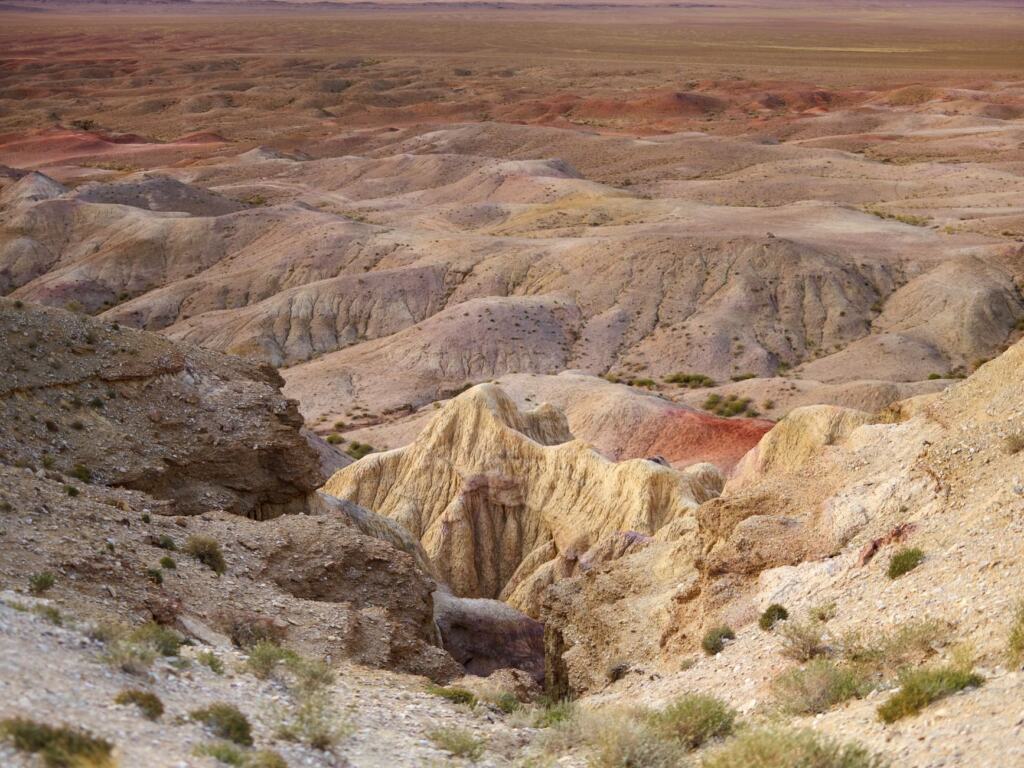
Most confusion about the species comes from three assumptions. The table sets each against what the evidence supports.
| Common assumption | What is supported | Planning use |
|---|---|---|
| Gobi bears roam freely across the desert | The range is restricted to about 23,600 km2 in proximity to water resources | Treat the bear as tied to particular places. A general desert itinerary is not a bear itinerary. |
| It is an ordinary brown bear that happens to live in a dry place | It is the only bear that lives exclusively in desert habitat | Think of it as a specialist whose survival depends on desert conditions, not as a bear seen anywhere in the region. |
| A small population recovers quickly | A female usually gives birth to a single cub every two years | Expect slow change in numbers. A single good year does not transform the outlook. |
The range and water link follow the Bears in Mind project description, while the desert-only status and breeding rate follow One Green Planet.
The practical lesson is that the Gobi bear is a question of place. Understanding where it lives explains almost everything else about its situation, which is where the next section begins.
Where Gobi bears live
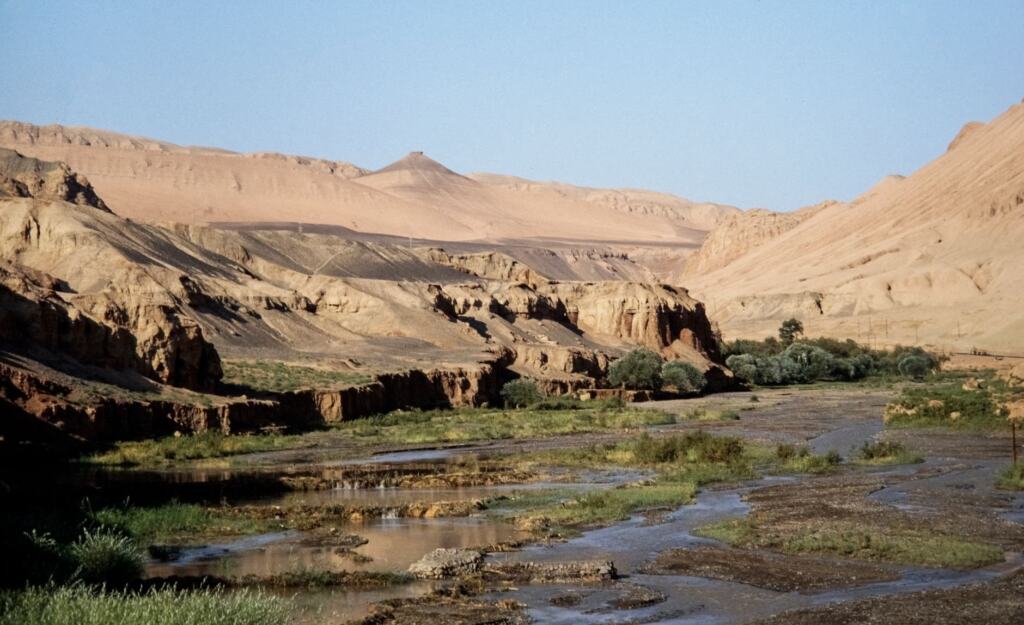
Gobi bears live in Mongolia, in a range that Bears in Mind describes as restricted to about 23,600 km2 in proximity to water resources. The key word is proximity. The bears are found near water, not spread evenly over the landscape.
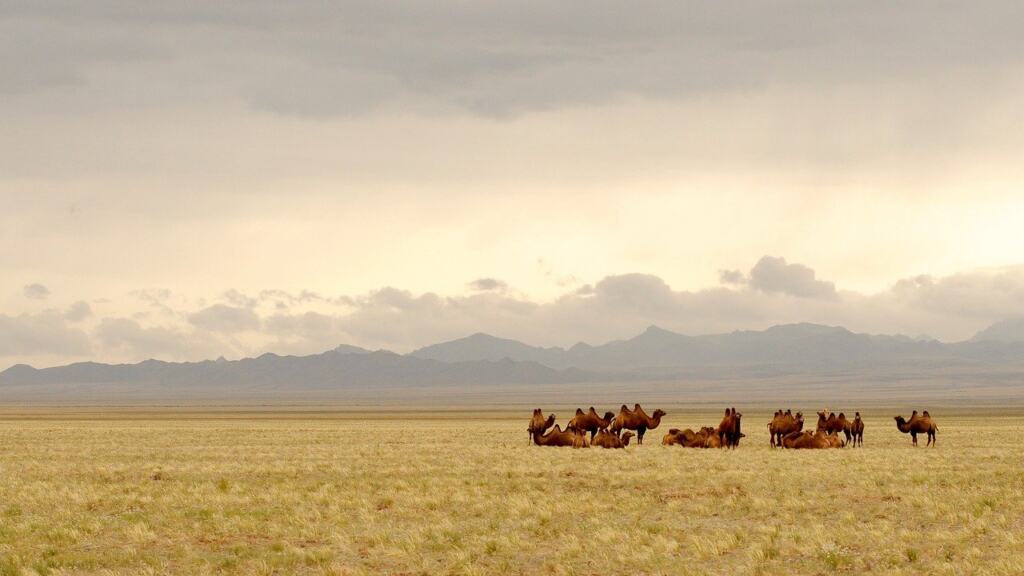
Water sets the boundary
In a desert, water is scarce and scattered, so an oasis or similar water source becomes the natural anchor of a bear’s movements. That is why a map of the range follows water rather than the outline of the desert. Anyone trying to understand why the species is so localised should start with the oasis, not with the bear.
Oases also connect this species to the wider desert system. Our overview of the gobi desert ecosystem shows how scarce water shapes which animals can live where.
Reading the range figure sensibly
The 23,600 km2 figure describes an area, not a density of bears. It does not mean that bears are present in every part of that area at any given time. For a species with a small population, the sensible reading is that the area marks where bears can be found near water, while the animals themselves occupy only a fraction of it at once.
How many Gobi bears are left
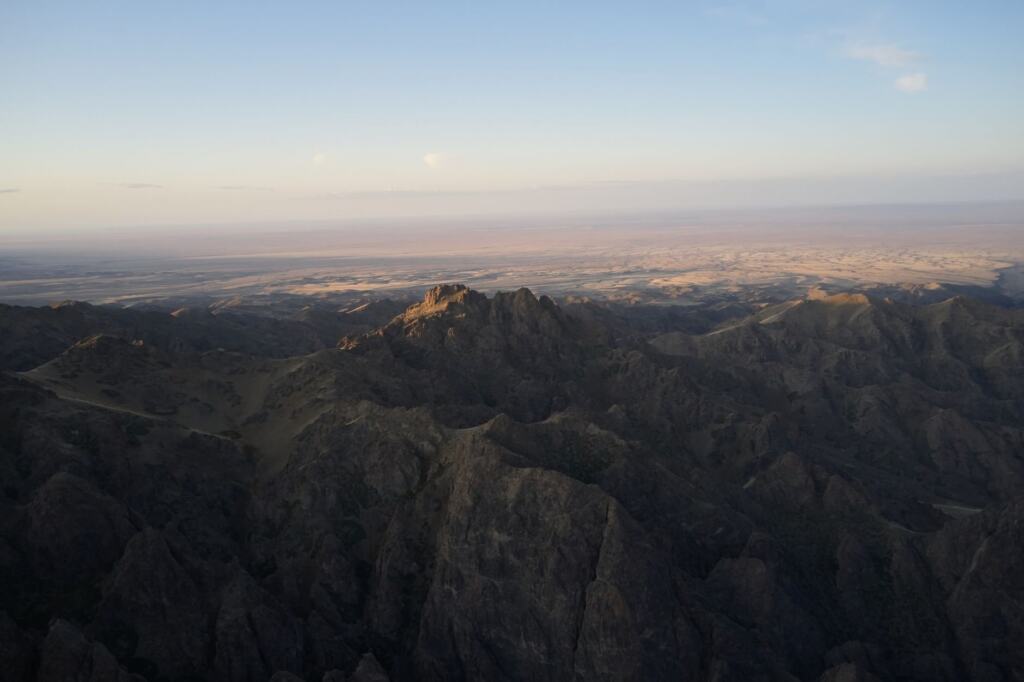
Xinhua reported that only 36 Gobi bears remained in the world at the end of 2018, and that Mongolia’s minister said in May 2022 that there were then a total of 51 mazaalai in Mongolia. A widely cited description puts the population at two dozen, maybe three dozen bears.
These figures come from different reports and different dates, so read them as the scale of the problem, not as a precise trend line. All of them describe a population small enough that every individual matters. The 2022 ministerial statement is the most recent count in this profile, and it is the one to quote if you need a single current figure.
Why recovery is slow
Breeding rate is the main brake. A female Gobi bear usually gives birth to a single cub every two years, so even a healthy run of years adds only a few animals. That is the practical reason a count of 51 should not be read as a population on the verge of safety.
Conservation: feeding stations and cameras
Conservation of the Gobi bear currently rests on direct monitoring and supplementary feeding. Under a China-assisted project described by Xinhua, work includes placing dietary supplements in feeding stations and installing surveillance cameras to identify Gobi bears.
Those two measures answer different problems. Feeding stations with dietary supplements add food in a landscape where the bears stay close to limited water resources. Cameras let researchers identify individual animals without disturbing them, which matters when a count of dozens is the whole species.
That is as far as the supplied evidence goes on diet: supplements are part of the response, and the bears’ range is tied to water. It would be a mistake to treat the feeding stations as a visitor attraction. They exist to support a population too small to lose animals.
Can tourists see a Gobi bear?
No, not in any way a traveller can plan for. The bears number in the dozens, live in a restricted range of about 23,600 km2 near water, and are identified through surveillance cameras rather than casual viewing. The small population and the bears’ tie to water are the reasons a sighting is practically impossible for visitors.
A few decisions follow from that.
- Do not build a trip around it. With a total of 51 mazaalai reported in May 2022 and a range tied to water, the odds do not support a plan that depends on seeing one.
- Value the evidence, not the encounter. Camera images and monitoring records are how the species is actually observed, so follow reports from the conservation project rather than hoping for a chance meeting.
- Choose other large desert animals. A more practical starting point for wildlife interest is our bactrian camel gobi desert guide, and the hub on gobi desert wildlife covers more species.
Reports on the numbers come from Xinhua and the range from Bears in Mind.
Frequently asked questions
| Question | Answer |
|---|---|
| Is mazaalai another name for the Gobi bear? | Yes. Mazaalai is the Mongolian name for the Gobi bear, and Mongolia’s minister used it in the 2022 population update reported by Xinhua. |
| Has the Gobi bear’s habitat changed over time? | Yes. Xinhua reports that the bears’ habitats have shrunk dramatically compared with the 1950s and 1960s, which is part of why the species now occupies such a small area. |
| What is unusual about the population’s make-up? | Bears in Mind reports a highly male-biased sex ratio and extremely low genetic diversity, two traits that a rising headcount does not change by itself. |