Argali sheep Mongolia travellers hope to spot are the world’s largest sheep, while ibex are the long-horned wild goats sharing the same rock. Horn shape separates them best, and both are hard to find without patient scanning of ridges.
Both animals belong to the broader community of gobi desert wildlife, where mountains hold very different species from the open plains. This guide sets argali and ibex side by side so you can identify each, understand where they live and see why argali numbers are a concern.
Argali and ibex compared
The argali (Ovis ammon) is a sheep, and WWF describes it as the world’s largest sheep. The Siberian ibex is a wild goat. That difference in family explains most of what you notice through binoculars: the build, the horns and the way each animal carries itself on steep ground.
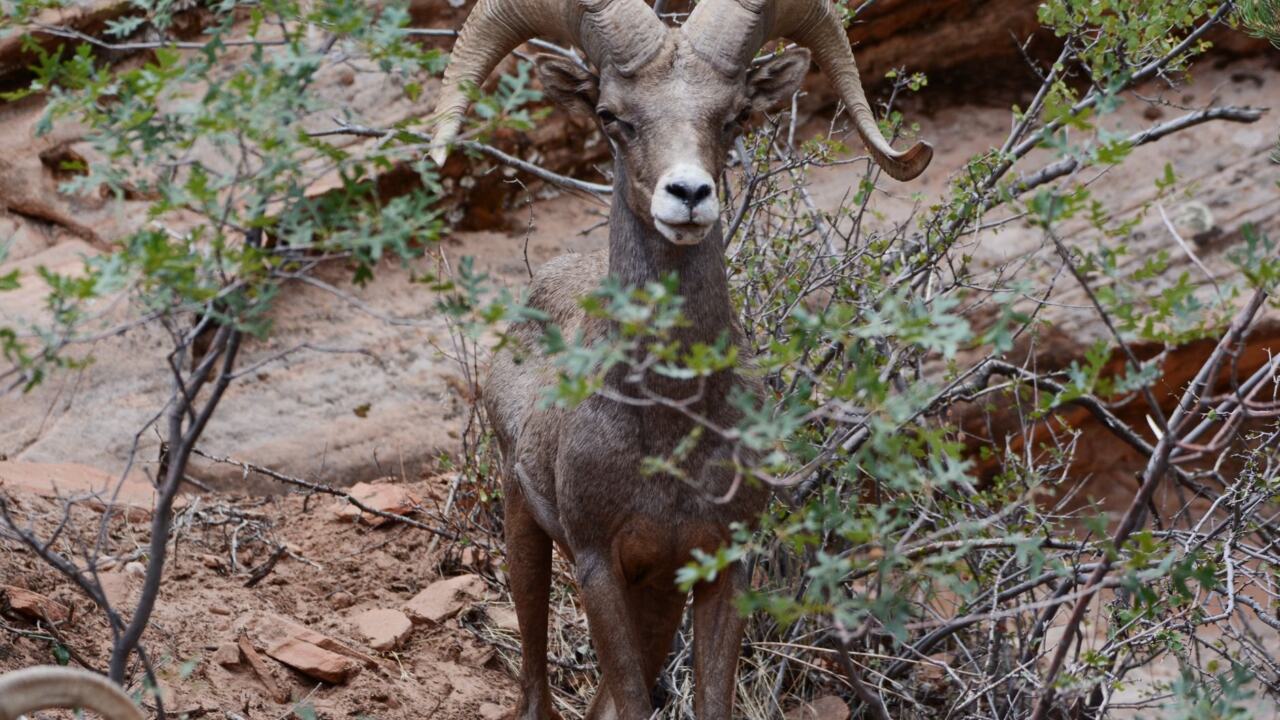
Argali rams are known for massive, spiralled horns that curl round the sides of the head. Ibex males carry long, ridged horns that sweep backwards in a curve. The horns are the quickest field mark, so start there before looking at anything else.
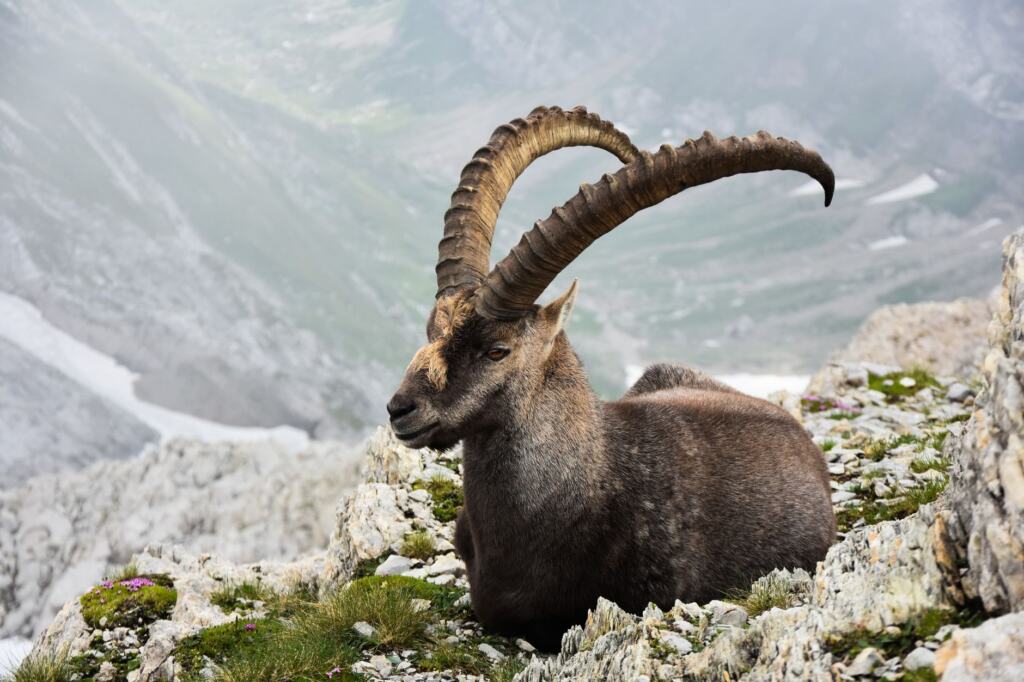
A four-step field routine
- Check the horns first. Heavy spirals that curl round and out point to an argali ram. Long ridged horns sweeping back over the shoulders point to a male ibex.
- Judge the build. A sheep that is the largest of its kind looks heavy and broad-bodied. An ibex looks more lightly built and angular, shaped for climbing.
- Note the ground. Ibex favour steep rock faces and cliffs. Argali use rocky slopes and ridges but are more often seen on less vertical ground.
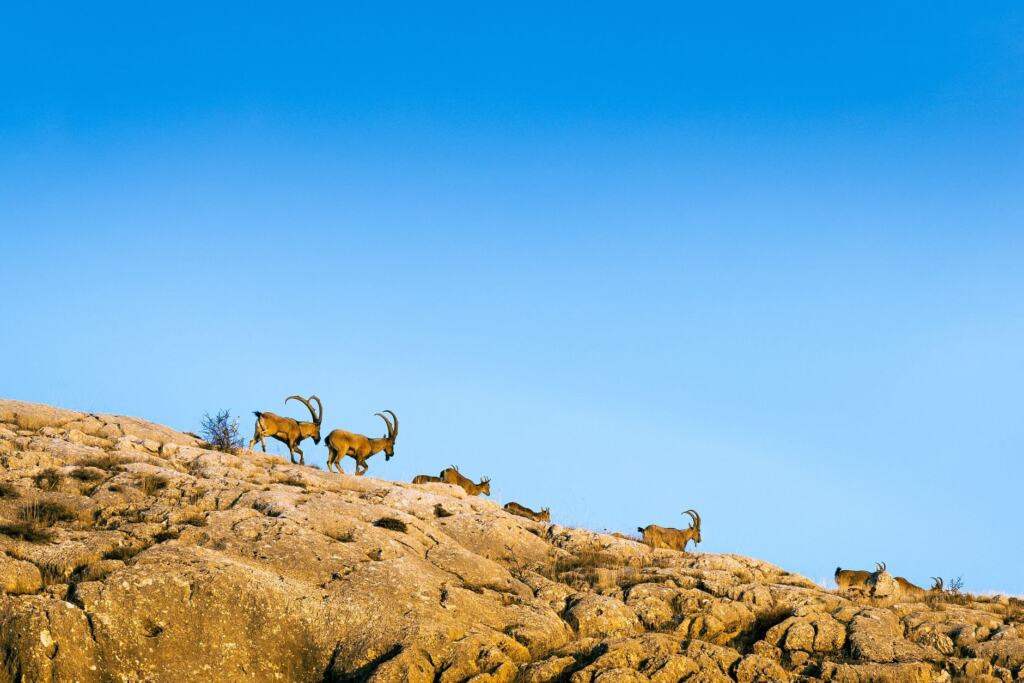
- Watch how the group moves. A herd strung along a ridge or picking down a rock face tells you how the animals use the terrain, which helps confirm what you are looking at.
Females and young animals carry smaller horns, so the horn test is least reliable for them. In that case, lean on the build and the terrain, and accept that some distant animals will stay unidentified.
Habitat in the Gobi Altai and Gurvansaikhan
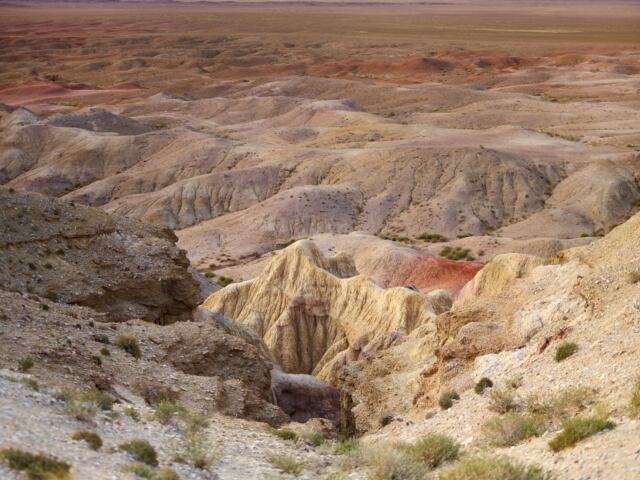
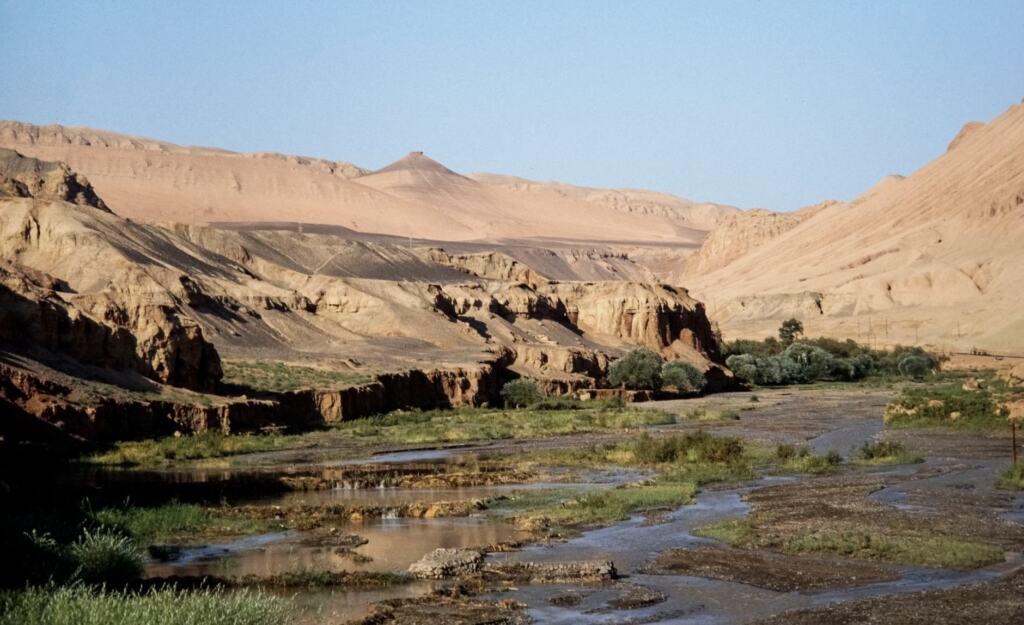
Both animals are mountain specialists, so the rocky terrain of the Gobi Altai and the ranges of Gobi Gurvansaikhan National Park are where they belong. Neither is an animal of the flat gravel plains. Anyone planning a trip to see them should plan around broken rock, ridgelines and canyon walls rather than open desert.
Canyons such as Yolyn Am in Gurvansaikhan are the kind of terrain that suits visitors: narrow, rocky and easy to scan from below. The animals blend into pale rock, so the first sign is often movement on a ledge rather than a clear outline.
Why rock matters to both species
Steep rock gives climbing animals a place to rest and a way to move quickly across slopes that few other grazers can use. A herd spread along a rocky ridge line shows this clearly: the animals use the ridge as both a travel route and a lookout. For a visitor, the practical lesson is to scan the skyline and the upper third of slopes first.
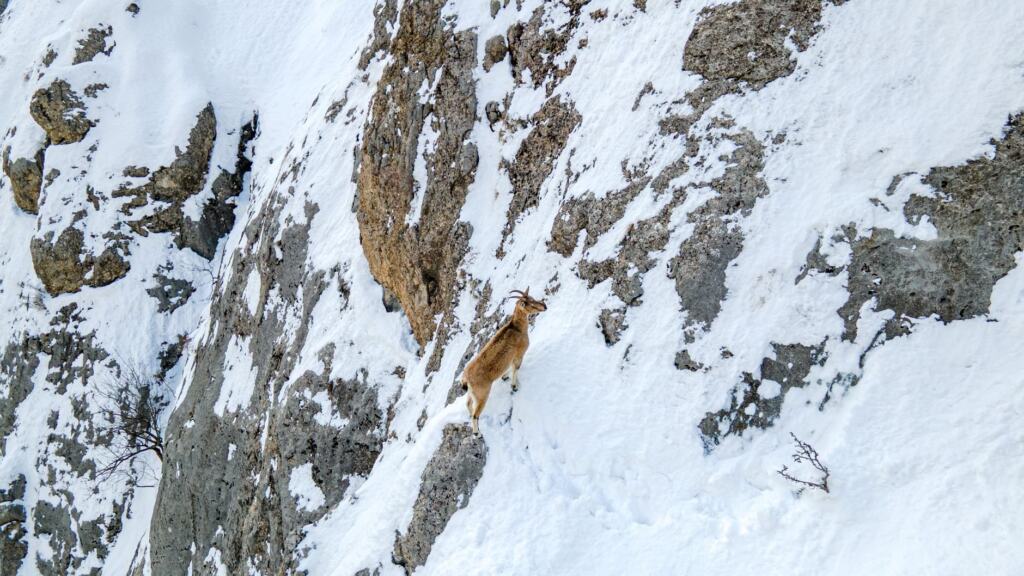
Where to see argali and ibex in Mongolia
For ibex, the rocky ranges of the Gobi Altai and Gurvansaikhan are the logical places to look, and canyon walls and cliff bands are the best vantage targets. For argali, the clearest research record in Mongolia comes from Uvs province in the north-west, where WWF has run a long monitoring programme. Argali are more elusive than the species most visitors expect to see on a Gobi trip, so treat a sighting as a bonus rather than a promise.
Improving your chances
- Use optics. Binoculars or a spotting scope let you check horn shape from a distance without approaching the animals.
- Scan before you walk. Sweep ridgelines and ledges slowly, then look for movement rather than shape.
- Go with local guides. Drivers and rangers who work the ranges know which valleys the animals use, and local knowledge is worth more than any fixed site list.
- Keep your distance. Disturbance pushes animals off the slopes you want to watch, and hunting pressure has already made them wary.
Lowland grazers are far easier to find than mountain animals. If your route also crosses open steppe, the guide to the asiatic wild ass mongolia covers an animal you can watch on flat ground.
How many argali are left in Mongolia
No single national total is established here. The best-documented figure comes from a ten-year WWF survey in Uvs province, which found as few as 380 argali in 12 areas across 800 km2, and showed that numbers there were decreasing.
That count is regional, not a national estimate, and it comes from a report posted on 7 October 2005. Read it as evidence of a downward trend in one province in that period, not as a current Mongolian population. WWF described the argali as endangered in that same statement. Anyone quoting a formal conservation category should check the current IUCN Red List entry for the species and the Mongolian regulations in force.
Threats: hunting, livestock and habitat loss
WWF’s species officer named poaching and uncontrolled hunting as some of the main reasons for the decline. Large horns make rams a target, which is one reason the animals stay wary and keep to remote rock.
Livestock is the second pressure. WWF lists competition with other livestock for pasture land and water, along with habitat encroachment and other human impacts. In dry mountain country, pasture and water are limited, so herds of domestic animals can displace wild sheep from the places they need. For visitors this is a reason to give wildlife space around water points and to avoid driving across slopes where animals graze.
The predators that share these mountains form a separate part of the picture, covered in the guide to gobi desert predators.
Frequently asked questions
Is an argali a sheep or a goat?
The argali is a sheep and is described by WWF as the world’s largest. The ibex is a wild goat, which is why its horns look so different from the spiralled horns of an argali ram.
Why does the date of an argali count matter?
Population figures describe a place and a moment. The Uvs count of as few as 380 animals comes from a ten-year survey reported in 2005, so it shows a regional trend rather than a present-day national total.
How is argali movement being tracked?
WWF has worked with the Mongolian Ministry of Nature and the Environment to monitor argali migration through radio collar tagging. A stationary field observatory has also been set up at Khukh Sair in Uvs province, with the aim of determining the natural migration of argali within Uvs.
What is the quickest way to tell ibex from argali?
Look at the horns. Long, ridged horns sweeping backwards mark a male ibex, while heavy spirals curling round the head mark an argali ram.