| Factor | Supported detail | Planning use |
|---|---|---|
| Population | Mongolia’s Gobi region is home to roughly 91,000 khulan, more than 84% of the global total, according to WCS. | Treat the Gobi as the core region for the species, and plan for herds that move rather than a guaranteed sighting. |
| Movement | Khulan depend on connected, open steppe to reach seasonal grazing areas and water in a dry, highly variable landscape. | Ask local guides where herds are now instead of relying on one fixed waterhole or valley. |
| Fencing | Fencing limits access to seasonal grazing and water on Mongolia’s steppe. | Expect animals to be wary of barriers, and favour open country away from fenced lines when choosing routes. |
| Eastern Mongolia | The species was absent from the east for more than six decades and is now recolonizing. | Treat the east as a developing area; the Gobi remains the safer bet for a dedicated trip. |
| Ecosystem role | Khulan are described as an umbrella and keystone species of the Gobi ecosystem. | Use khulan as a signal of how intact the wider steppe is when choosing wildlife routes. |
Population and role figures come from WCS as reported by Yahoo News and from the conservation group Govi-in Khulan.
Searching for asiatic wild ass Mongolia information leads to the khulan, Equus hemionus hemionus, a wide-ranging subspecies concentrated in the Gobi. Herds follow grazing and water, so sightings depend on movement, not a fixed spot.
The animal is one of the headline species in our guide to gobi desert wildlife. This page covers what its numbers, movement and naming mean for anyone planning to look for it.
Population and what it changes for visitors
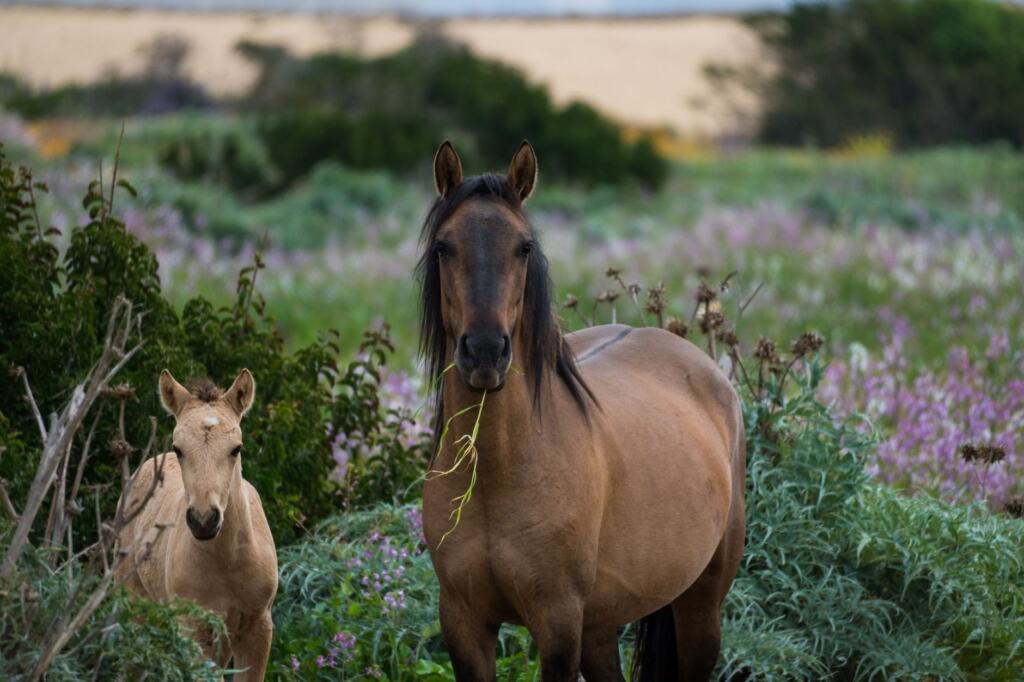
WCS reporting puts roughly 91,000 khulan in Mongolia’s Gobi region, more than 84% of the global total, according to a 2026 news report. That makes Mongolia the stronghold of the species and the most realistic country in which to meet a wild ass at all.
Whether the population is stable has no single yes or no answer. The same report describes khulan returning to eastern Mongolia after an absence of more than six decades, and cites an Oryx study giving the first confirmed evidence of recolonization within the historical range. Against that, a literature review covering research to 2005 found that Asiatic wild asses once ranged across central Asia, that their range has been reduced, and that all subspecies were under threat as of 2007. The picture is a large Gobi population with a recovering range, but not a settled one.
- Choose the Gobi for a dedicated trip. The concentration of animals there outweighs any other region for a visitor who wants a real chance of a sighting.
- Treat the east as a bonus. Recolonization is recent, so eastern Mongolia suits travellers already passing through rather than those building a whole itinerary around khulan.
- Read the headline number as a regional total. Roughly 91,000 animals spread over an enormous region does not mean herds are close together or easy to find.
Seeing khulan in the Gobi
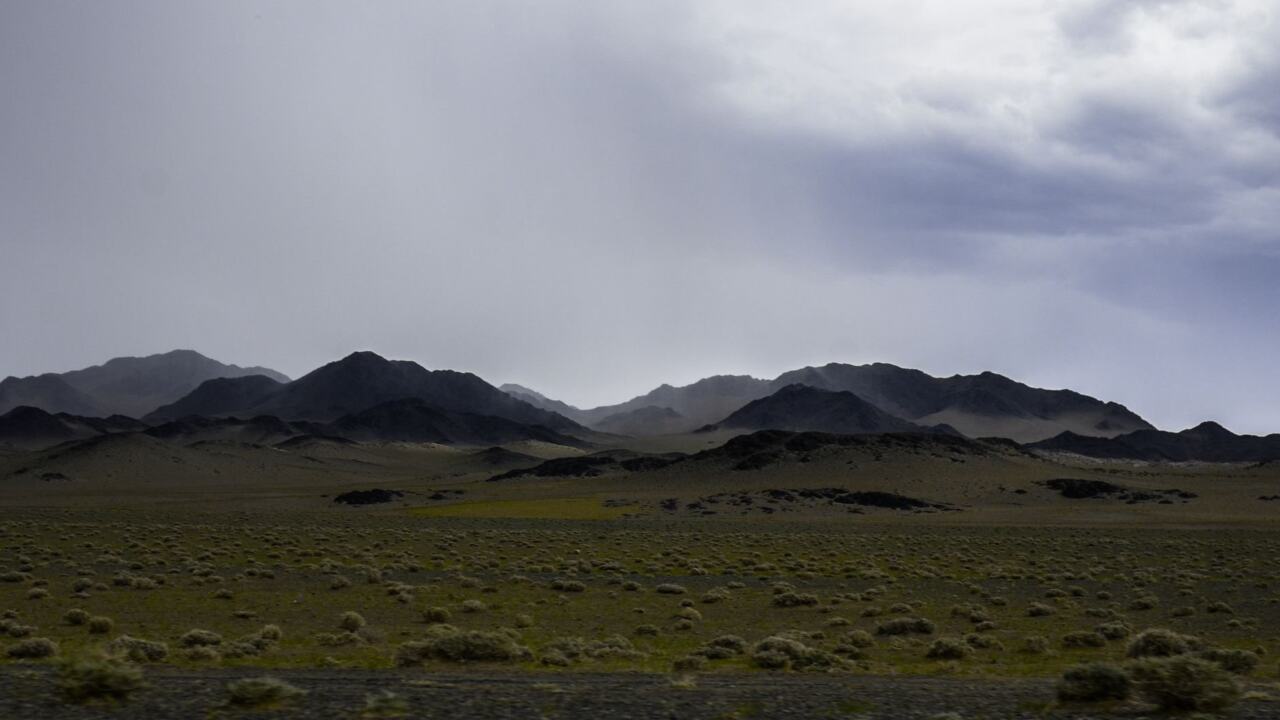
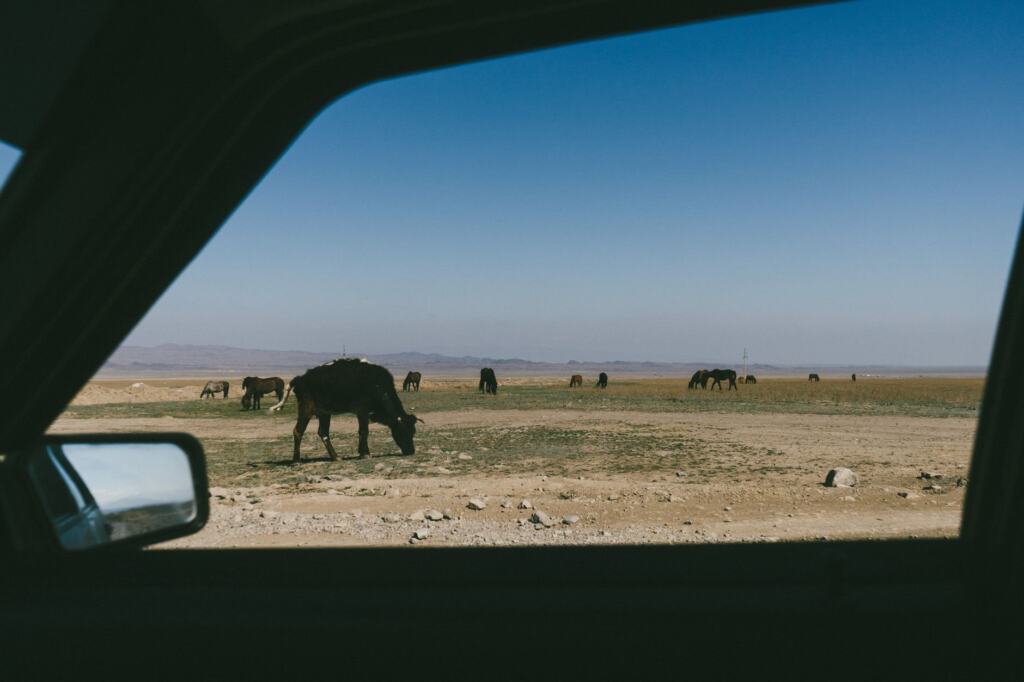
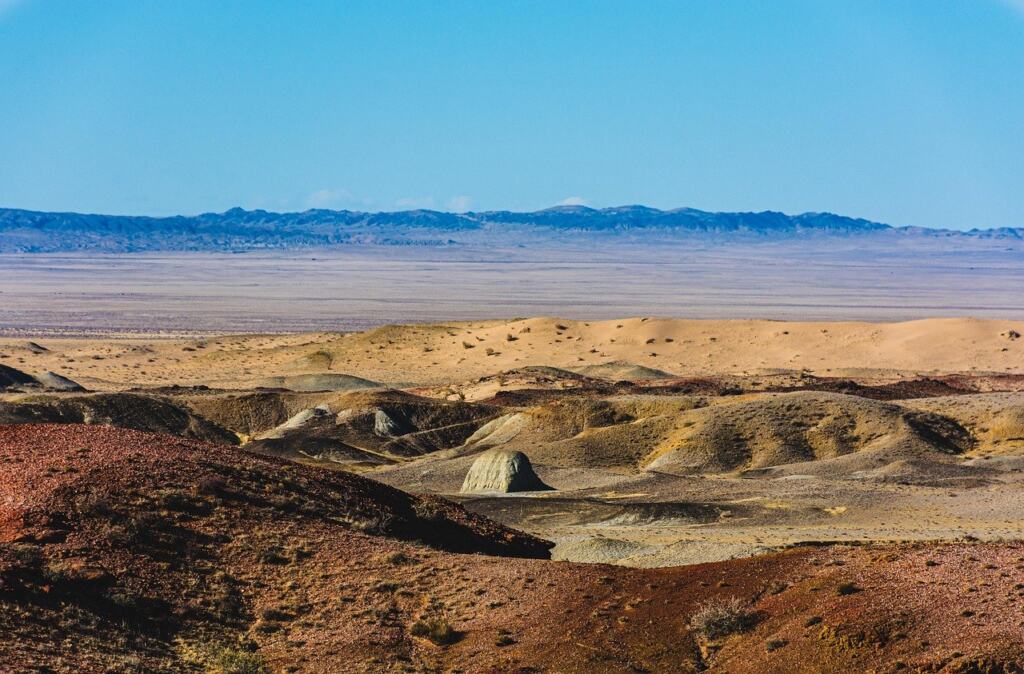
No single site is a reliable place to see khulan, because the animals follow seasonal grazing and water across open steppe. According to reporting on the recent recolonization findings, the species depends on connected, open steppe to reach those resources. A visitor is therefore looking for herds in the right type of country at the right time, not for a fixed attraction.
- Plan around movement. Ask drivers and local guides for recent herd locations rather than relying on a map of reliable spots.
- Expect distance. On wide, open ground, animals are often seen far off, so plan to watch from a distance instead of expecting close encounters.
- Keep expectations modest in the east. Khulan have been recorded crossing the Trans-Mongolian Railway in recent years, but the east is still being recolonized and is not an established viewing area.
- Combine species. Open-country travel also suits reading about the mongolian gazelle, while mountain wildlife is covered in the guide to argali sheep mongolia.
Threats and pressures
Khulan face serious pressure from habitat fragmentation, competition with livestock, illegal hunting and a warming climate, as the study authors’ summary and WCS-linked reporting both note. The pressures overlap, and fragmentation is the one with the clearest cause and effect.
Fencing along the Trans-Mongolian Railway severed the east-west movement that once carried khulan across the country, and the eastern range emptied as a result. In May 2025 a monitored, fence-free passage corridor was designated on the railway near the China-Mongolia border. Its purpose is to restore a crossing point, which shows how much a single barrier can shape where an animal lives.
- Fragmentation. Barriers cut animals off from seasonal grazing and water, which is why connected steppe matters more than any single protected patch.
- Livestock competition. Domestic animals share the same dry grazing, so khulan and herders draw on the same limited resource.
- Illegal hunting. This is a continuing pressure reported alongside the habitat problems, not a historical footnote.
- Climate. A warming climate is listed as a further strain on a landscape that is already dry and highly variable.
Food, water and long-distance movement
Khulan are grazing animals that depend on seasonal grazing areas and water in Mongolia’s dry, highly variable steppe, according to WCS-linked reporting. They find both by covering large distances across connected, open ground, which is why the species is best thought of as nomadic within its range rather than tied to one territory.
This movement explains most of the earlier points. A herd seen at one place this season may be elsewhere next season, so a sighting reflects timing and local conditions as much as skill. It also explains why fences matter so much: an animal that must travel to reach food and water cannot simply stay put when a barrier blocks the route.
Conservation groups use this role to justify their focus. Govi-in Khulan describes the khulan as an umbrella and keystone species of the Gobi ecosystem, meaning that keeping enough connected steppe for khulan also benefits the wider system.
Khulan, onager and other names
Khulan is the Mongolian name for the Mongolian wild ass. The US Fish and Wildlife Service lists it as Equus hemionus hemionus, a subspecies of Equus hemionus, the Asiatic wild ass. So khulan is not a different species from the Asiatic wild ass; it is the form found in Mongolia.
Onager is a different label in the same family of names. A review of the research literature had to search for Equus hemionus, wild ass, khulan, kulan, kiang, khur and onager to capture the topic, which shows how many regional names are in use. The same review found that nearly half of the genetics papers to 2005 focused on onagers, and that almost nothing had been published on the distribution of subspecies.
- Use khulan for Mongolia. It is the name that matches local usage and the subspecies Equus hemionus hemionus.
- Do not transfer onager findings. Because so much genetic work centred on onagers, conclusions about them should not be assumed to describe the khulan.
- Check any range map. Subspecies distribution was thinly documented in the older literature, so treat tidy maps of where each subspecies lives with caution.
Frequently asked questions
Do khulan cross the Trans-Mongolian Railway?
Yes. Monitoring recorded khulan crossing the railway in recent years, including during winter.
How much research exists on Asiatic wild asses?
A literature review found 61 relevant references published between 1900 and 2005, and very little of it covered habitat use.
Who works on khulan conservation in the Gobi?
Govi-in Khulan has worked in Mongolia’s Gobi Desert since 2008 to protect the Mongolian wild ass.
Is the khulan the same as the Mongolian wild ass?
Yes. Mongolian wild ass is the common name for Equus hemionus hemionus, the animal Mongolians call khulan.