| Reader situation | Bird | Status and habitat | Planning use |
|---|---|---|---|
| Want a bird found nowhere else | Henderson’s ground jay | Mongolian endemic; open, dry steppe and high-altitude semi-desert | Plan time on open gravel and steppe rather than in towns or valleys |
| Want a raptor | Saker falcon | Mongolia’s national bird; open grassland with few trees or cliffs, and rocky outcrops | Scan outcrops and open ground from a vehicle |
| Visiting water | Demoiselle crane | Waterways, ponds and wetlands in the Gobi region | Build a stop at water into the route; timing is covered below |
| Want a threatened-looking desert specialist | Houbara bustard | Semi-desert and valleys between mountains up to 8,000 feet | Choose semi-desert stretches and valley floors rather than high mountain terrain |
| Visiting an oasis | Saxaul sparrow | Deserts, especially around rivers and oases | Look in shrub cover near springs and river courses |
Habitat details here come from the Three Camel Lodge Gobi bird guide and the White Hawk Birding Gobi destination profile.
Birds of the Gobi Desert are best found by habitat: Henderson’s ground jay on dry steppe, saker falcon on open grassland, demoiselle crane at water and houbara bustard in semi-desert. Match the species to the terrain you will visit.
This list is one slice of gobi desert wildlife. It is organised by what a visitor is trying to see, so you can pick the section that fits your route and skip the rest.
If you want a bird found nowhere else
Choose Henderson’s ground jay. It is the one Gobi bird on this list that is a Mongolian endemic, and birding operators call it one of the most iconic birds of the Gobi.
Henderson’s ground jay
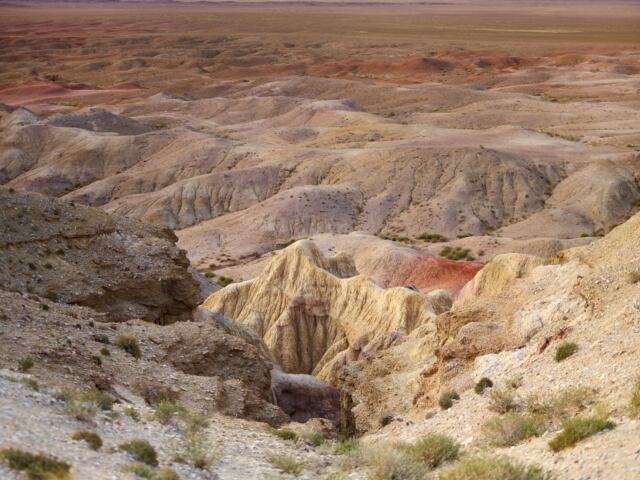
Henderson’s ground jay, also called the Mongolian ground jay, is a Mongolian endemic. The Three Camel Lodge guide places it in open, dry steppe, and White Hawk Birding describes it as one of the most iconic birds of the Gobi. It runs across open ground more than it perches in cover, so scan flat gravel and steppe rather than scrub.
Where you can see it is more specific than “somewhere in the Gobi”. The Three Camel Lodge guide names the rolling hills just north of the Hongoryn Els sand dunes. A May 2026 Birding Ecotours trip report found it in the southern Gobi grasslands and sand dunes. A 2017 Field Guides tour list records it from a dusty road about 120 km into the Gobi, so the species does not require a deep expedition to reach.
- Best suited to: visitors with limited time who want one distinctive bird they cannot see elsewhere.
- Limitation: it is tied to open, dry steppe and high-altitude semi-desert, so a route that stays in valleys or near towns will miss its habitat.
- What to do: build a stop at the dune-edge hills in the south and spend it on foot, scanning bare ground.
If you want a raptor on open ground
Choose the saker falcon. It is the most dependable large bird of prey for open terrain, and it is a national symbol, so it is worth a deliberate search.
Saker falcon
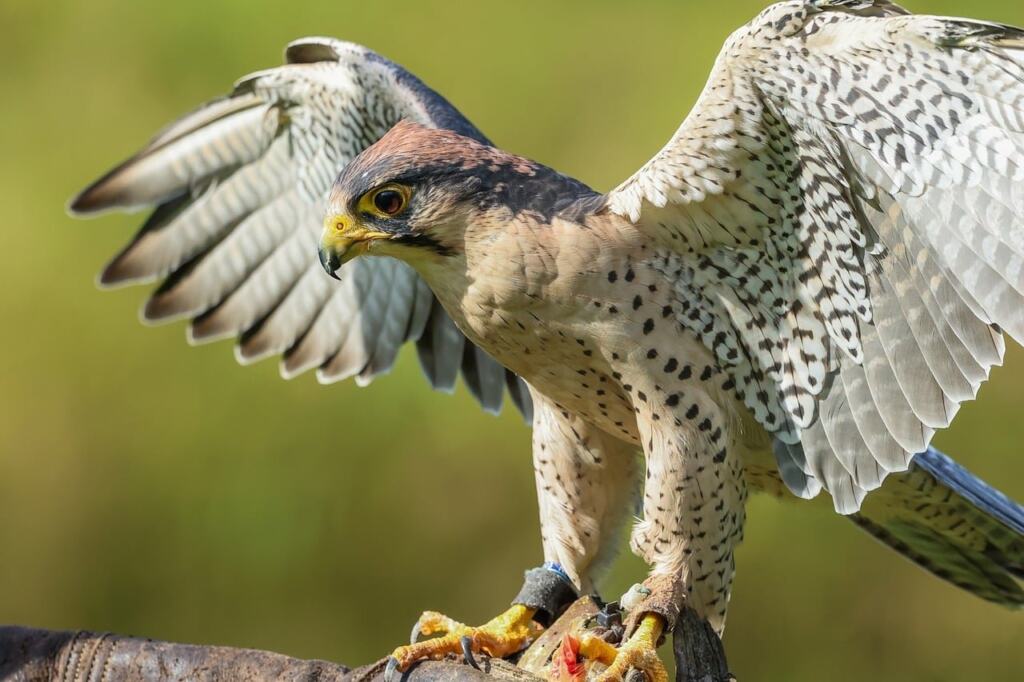
Yes, saker falcons are found in Mongolia. White Hawk Birding calls the saker falcon Mongolia’s national bird and recommends looking for it, along with bearded vultures, perched on rocky outcroppings in the Gobi area. The Birding Ecotours report from May 2026 lists a saker falcon among the raptors seen near the Dalanzadgad mountains, alongside bearded vulture, Himalayan vulture, golden eagle and steppe eagle.
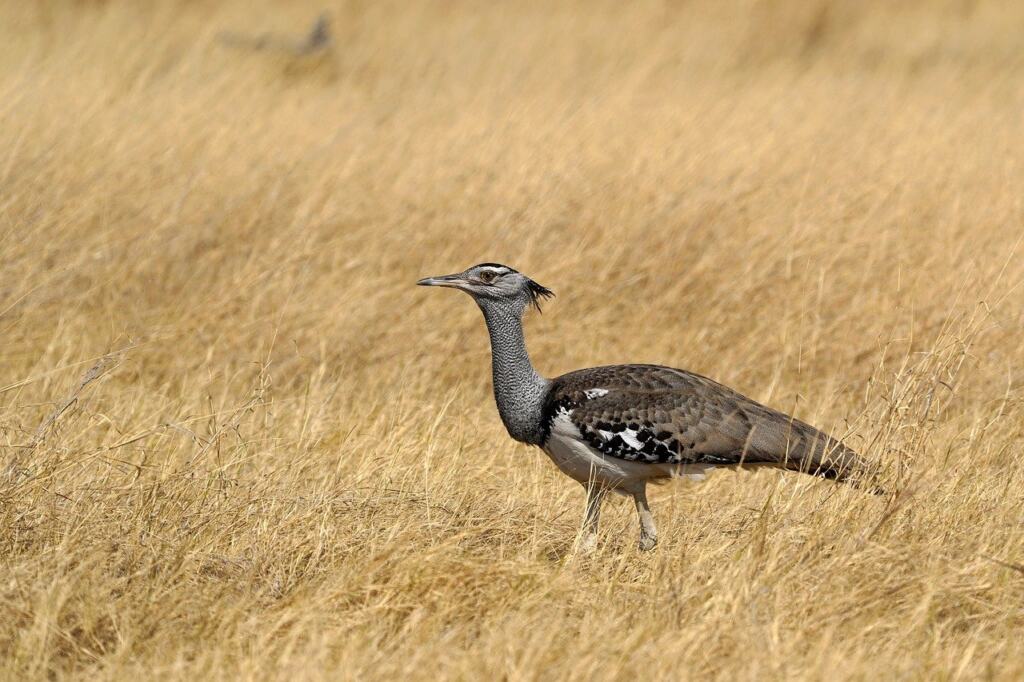
Its terrain, according to the Three Camel Lodge guide, is open grassland with few trees or cliffs. That combination explains why lookouts matter. Where perches are scarce, a rocky outcrop or isolated post becomes the place to look.
- Best suited to: travellers driving across open country who can stop and glass every outcrop.
- Limitation: it favours treeless terrain, so wooded valleys and oasis groves are poor places to hunt for it.
If your route passes water and oases
Plan a stop at any permanent water. Springs, ponds and wetlands hold birds that the surrounding gravel does not.
Demoiselle crane
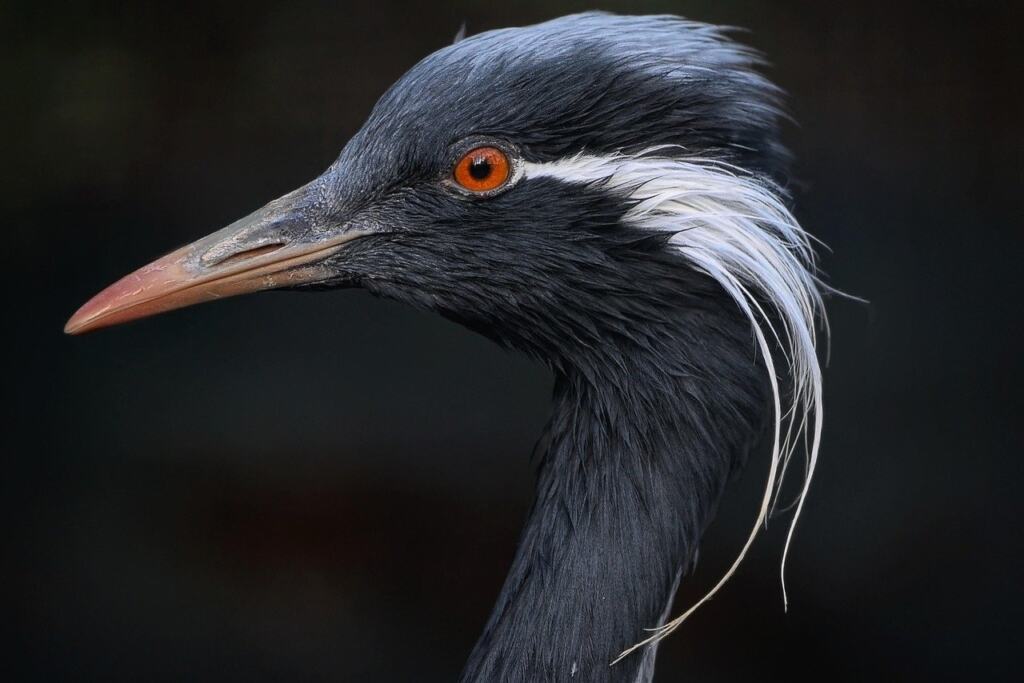
Demoiselle cranes visit Mongolia in the late-spring breeding season, judging by tour records. The 2017 Field Guides list first notes them on 2 June at Green Lakes, with quite a few seen afterwards and a nest with two eggs found at Khustai. The May 2026 Birding Ecotours report names demoiselle crane among its major highlights at the Gun-Galuut steppe on 14 May. Those are steppe sites rather than Gobi ones. White Hawk Birding places the species at waterways, ponds and wetlands in the Gobi region, so the Gobi itself offers the same habitat type.
Water levels change the odds. In 2017, a dry spring left wetland water levels low despite good winter snowfall, and some species were scarce. Do not assume a mapped pond will hold birds in a dry year.
- Best suited to: visitors travelling in May or early June who can include wetlands on the itinerary.
- Limitation: it follows water, so a route confined to dry gravel will miss it.
Saxaul sparrow and other oasis birds
An oasis in the Gobi is a small patch of ponds, springs, scattered trees and sturdy bushes. White Hawk Birding says these features attract birds and give them a safe haven. The saxaul sparrow shows how tightly a bird can follow that pattern: the Three Camel Lodge guide finds it in deserts, especially around rivers and oases, among shrubs such as saxaul, poplar and tamarisk.
For visitors, that makes shrub cover near water the best spot for a short, patient stop. A stand of the saxaul tree is a sign of the habitat this sparrow uses.
If you want a bustard in semi-desert
Choose the houbara bustard if your route crosses semi-desert and mountain valleys rather than pure sand or dune fields.
Houbara bustard
According to the Three Camel Lodge guide, houbara bustards inhabit semi-desert and valleys between mountains up to 8,000 feet above sea level. That is a ceiling on where to look, not a target: the habitat is semi-desert and valley floors, and the elevation figure only marks how high the species is found.
- Best suited to: visitors on longer drives through semi-desert and valley terrain.
- Limitation: a bustard in dry grass is easy to overlook, so slow scanning from a stopped vehicle works better than looking from a moving one.
Setting expectations and where to look
Expect a modest list. Operators give differing figures for the Gobi, and none claims it rivals the rest of Mongolia.
The Three Camel Lodge guide cites 513 bird species in Mongolia and about 50 to 60 species roaming the skies of the Gobi Desert. White Hawk Birding says biologists have recorded over 500 species in Mongolia, with approximately 150 of them found in the Gobi.
That gap argues for choosing targets rather than hoping to tick a long list. Pick the situation that fits your route, then plan stops around it.
- Dry steppe and dune edges: Henderson’s ground jay.
- Outcrops and open grassland: saker falcon.
- Springs, ponds and wetlands: demoiselle crane and saxaul sparrow.
- Semi-desert and valleys: houbara bustard.

Once the birds are covered, the same dry ground rewards a look at other wildlife, and the reptiles of the gobi desert are the natural next stop.
Frequently asked questions
| Question | Answer |
|---|---|
| Are the Henderson’s and Mongolian ground jay the same bird? | Yes. The Field Guides tour list writes “Henderson’s (Mongolian) Ground-Jay”, and White Hawk Birding uses the name Mongolian ground jay. |
| What do saker falcons eat in the Gobi? | According to the Three Camel Lodge guide, the saker falcon feeds mainly on rodents and smaller birds. |
| Do Mongolian birds stay all year? | Many do not. The same guide says more than 60% of Mongolia’s birds are migratory, which is why visit timing matters for species such as the demoiselle crane. |
| When does the saxaul sparrow breed? | The Three Camel Lodge guide says its breeding season is short, lasting from May to July. |