The saxaul tree is a drought-hardy, salt-tolerant desert tree that is planted in shelterbelts and windbreaks against wind erosion. It is not a pioneer sand stabilizer, so planting it on moving dunes gives low survival.
That condition shapes how saxaul should be understood, valued and used. Below are its measurable traits, the black and white saxaul distinction, its limits in sand control, and where it fits in the wider region. For the animals of the same landscape, see our guide to gobi desert wildlife.
Black saxaul at a glance
Black saxaul is the best-documented saxaul in the reference record, and its figures give a useful baseline for judging any stand you read about or visit. The table gathers the traits that matter most for identification and planning.
| Trait | Value | Planning use |
|---|---|---|
| Scientific name | Haloxylon aphyllum; Haloxylon ammodendron and Arthrophytum aphyllum are listed as synonyms | Search literature under all three names, because papers use them interchangeably |
| Form | Small evergreen tree | Expect a woody, year-round presence rather than a seasonal shrub |
| Height | 5-8 m | Gives a realistic scale for windbreak height |
| Trunk diameter | 20-40 cm | Helps tell mature trees from young plantings |
| Tolerances | Drought hardy; salt-tolerant; often found in salt deserts | Points to saline, dry ground as its natural setting |
| Natural range | 30-45°N latitude; elevation 200-2500 m | Shows that saxaul spans a broad band of latitudes and altitudes, not one site |
These figures come from the FAO EcoCrop entry for black saxaul.
The height and trunk diameter explain why saxaul is called a shrub-tree. It is a woody plant that reaches tree height but grows in conditions that keep most trees out. Treat these numbers as the size a healthy individual reaches, and expect smaller plants in harsher spots.
How saxaul survives drought
FAO describes the tree as drought hardy and salt-tolerant, and notes that it is often found in salt deserts. Those two traits explain much of its distribution. Salty soil makes water harder for most plants to use, so a plant that copes with both dryness and salt can hold ground that competitors cannot.
The same record calls it evergreen. A plant that stays green all year does not depend on a short wet season to rebuild itself. That makes it a dependable feature of the landscape through dry spells, which is part of why it is valued as a planting species.
Longevity completes the picture. A lifespan of 50-70 years, rarely 100, means a stand that establishes successfully can remain for decades. The practical lesson is that early survival matters far more than early growth speed. A planting that gets through its first difficult years can pay back over a long period, while a failed one leaves little to show for the effort.
Black saxaul and white saxaul
Black saxaul is Haloxylon aphyllum, and the FAO record lists Haloxylon ammodendron among its scientific synonyms. A text that uses either name may therefore describe the same plant. White saxaul is the name used for the separate companion species. The height, trunk and range figures above belong to black saxaul and should not be carried over to it.
The distinction matters because saxaul facts get mixed freely in popular writing. Use this short routine when you read any account of the plant:
- Check the Latin name. Treat Haloxylon ammodendron and Haloxylon aphyllum as potentially the same plant in older or regional sources.
- Check which species the numbers describe. A height or lifespan figure for black saxaul is not a figure for white saxaul.
- Check the ground. Black saxaul is documented in salt deserts, so a claim about saline flats says something different from one about shifting sand.
When you compare the two species directly, take each one’s measurements from a botanical reference that names the species explicitly, rather than blending numbers from different pages.
Does saxaul stop desertification?
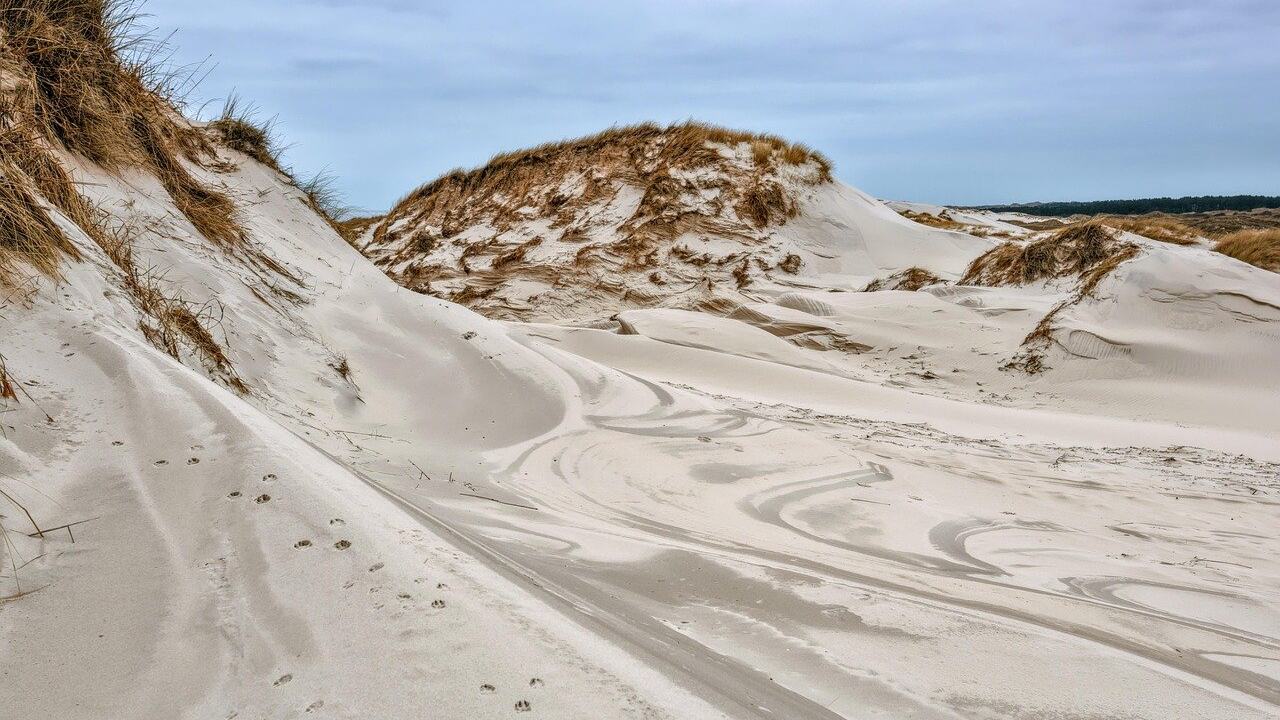
Saxaul helps against wind erosion but does not stop desertification by itself, and it should not be the first thing planted on drifting sand. FAO states that it is planted in shelterbelts and windbreaks to combat wind erosion, but is not a pioneer sand stabilizer. The same entry says that sowing and planting on moving dunes result in low survival.
The role is therefore specific. Saxaul works as a protective belt that slows wind across land that is already fairly settled. It does not work as the opening move on a mobile sand dune. A plan that treats it as a cure-all for sand movement will lose seedlings and money.
Planting trials on dried lake beds
A supplier of agricultural products reported a saxaul planting trial on the desiccated bed of the Aral Sea in Karakalpakstan in March 2021. It was laid out as three rows of 100-120 m and was aimed at improving tree survival in difficult ground.
Read it for what it is, a small row trial of a technique. It shows that saxaul is being tried on exposed, dried lake bottom, but it is not a programme-scale result and does not show that planting reverses desertification. Larger claims for planting programmes need area and survival figures from an official or peer-reviewed report.
Using saxaul sensibly
- Judge the sand first. If the surface is a moving dune, expect low survival and look for another way to settle the ground before planting saxaul.
- Give it a windbreak job. Rows or belts on steadier ground match the use FAO records.
- Plan for decades. The lifespan makes this a long-term feature, so choose sites you can protect.
- Treat trial reports as demonstrations. A short planting row says little about survival across a whole district.
Saxaul in the wider desert landscape
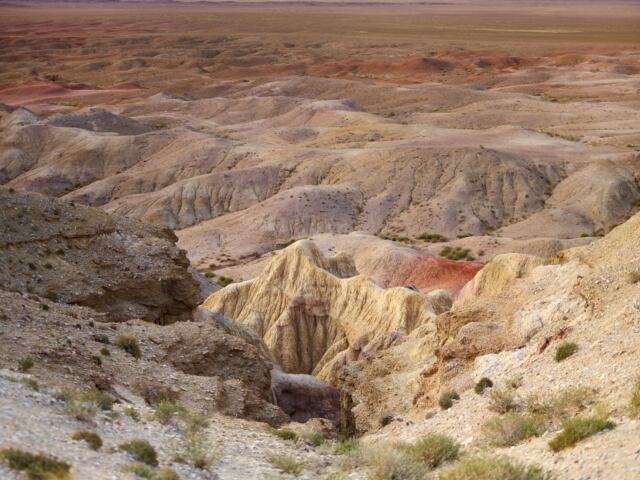
Saxaul is not confined to one famous grove. FAO gives its natural range as 30-45°N latitude and 200-2500 m elevation, and notes that it is often found in salt deserts. For a visitor to the Gobi Desert, that suggests looking in open, dry, salty parts of desert country rather than expecting one marked forest. A local guide or park office can point to specific stands and advise on access.
Shrubby vegetation like this is part of what visitors notice in dry country, and the same landscapes hold wildlife worth watching for. Two companion guides cover animals of the region: przewalski’s horse mongolia and birds of the gobi desert.
Frequently asked questions
What other names does black saxaul go by?
FAO lists Black saxaul, Black saksaul, Saksaul, Saksaul cheryni and Odzhar as common names for it.
Is saxaul a tree or a shrub?
FAO describes black saxaul as a small evergreen tree. Its habit, a woody plant that grows in harsh desert ground, is why it is often called a shrub-tree.
How long does a saxaul live?
FAO gives a lifespan of 50-70 years, rarely 100 years, so a successful planting can last for decades.