Gobi desert photography works best when each site is matched to its light: Flaming Cliffs and Khongoryn Els around sunrise or sunset, and dark open ground away from towns for the Milky Way. Plan around local sunrise and sunset times.
This plan sits within our wider gobi desert facts coverage. It pairs each location with a time of day, a season and a few gear habits.
How these locations were chosen
The selection is ordered by the kind of light each place rewards, not ranked. The supplied evidence does not justify calling one site better than another, so the list runs from cliff to dune to gorge to camp, and you can reorder it to suit your route.
Three criteria shaped the choices. Each site needs a clear subject, a light condition that changes how it looks, and a practical limit you should know before you go. The Gobi covers over 1.3 million square kilometres, and the same source describes it as a region best explored as part of a tour. If you want a sense of that scale first, read how big is the gobi desert. Expect to shoot where your itinerary stops rather than choosing every sunrise spot yourself.
One photographer on a November 2013 trip noted that the landscape would change twice-daily across a small area. That is a good reason to build your plan around light rather than around a list of landmarks.
Gobi desert photography locations by light
Flaming Cliffs: plan around sunrise and sunset
Flaming Cliffs is listed at latitude 44.1398307, longitude 103.7158846, under Umnugovi, Bulgan. It suits photographers who can be on site at the edges of the day and who want a strong, simple subject in the frame.
On 27 October 2026 the same page gives sunrise at 7:35:36 AM and sunset at 6:04:52 PM in Ulaanbaatar Standard Time. Treat those as the anchors for your visit. Arrive well before the listed time, set up, and keep shooting as the light changes. The limit is flexibility: with a tour schedule you may get one slot only, so choose sunrise or sunset deliberately rather than hoping for both.
Khongoryn Els: dunes and panoramas
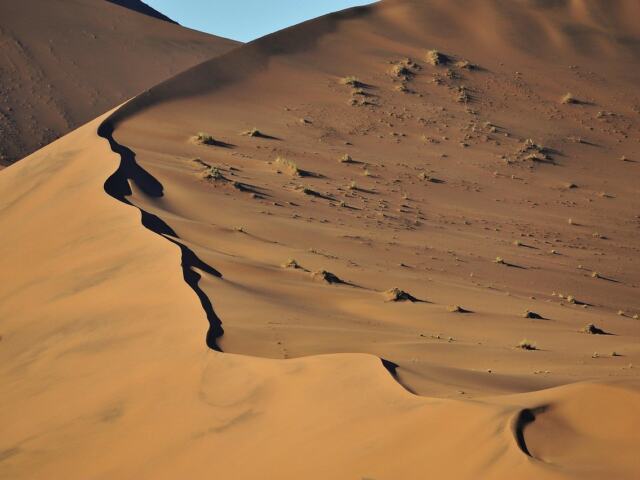
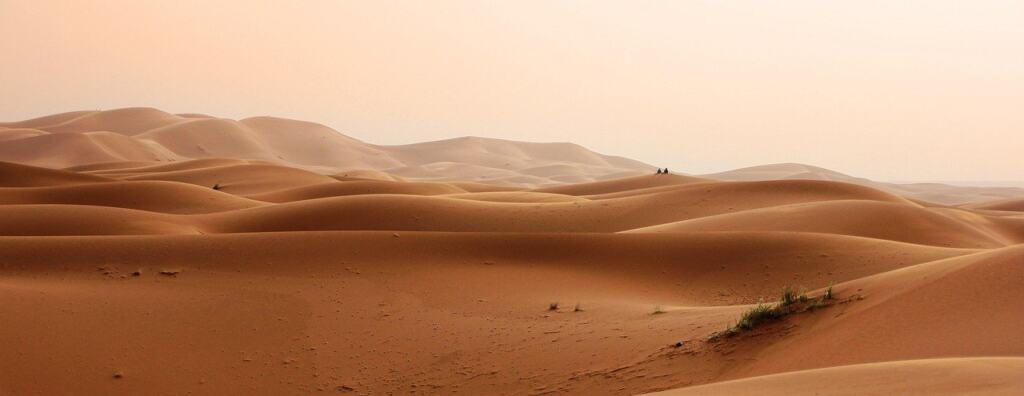
Khongoryn Els, also called the Khongor sand dunes, reach heights of up to 800 m and stretch for 100 km. That length makes it the natural choice for wide frames and for anyone who wants a Gobi desert panorama rather than a single detail.
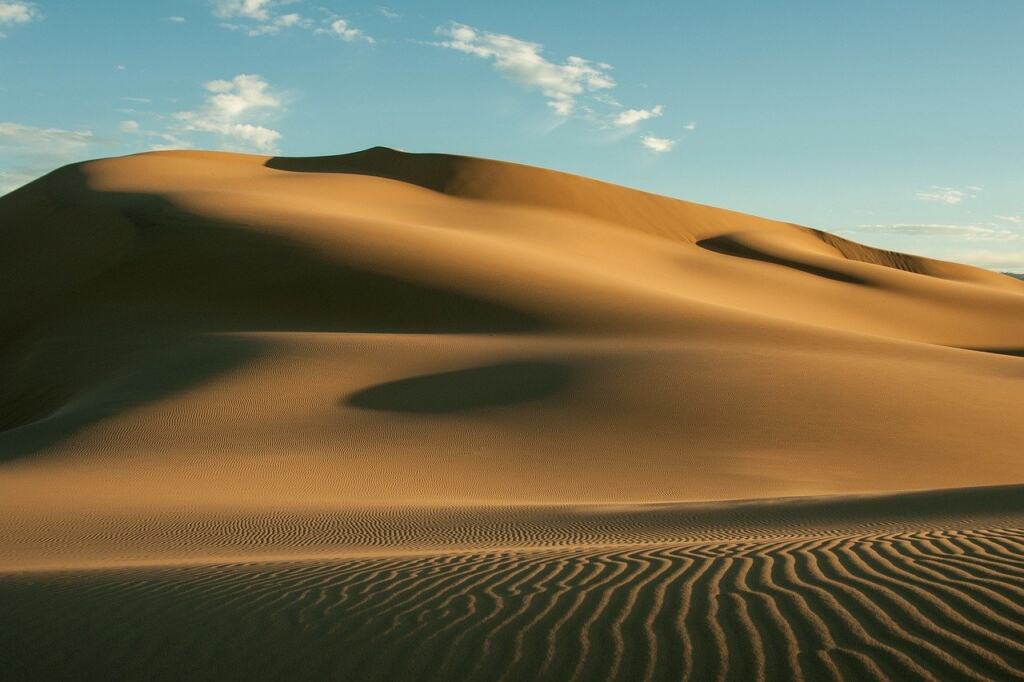
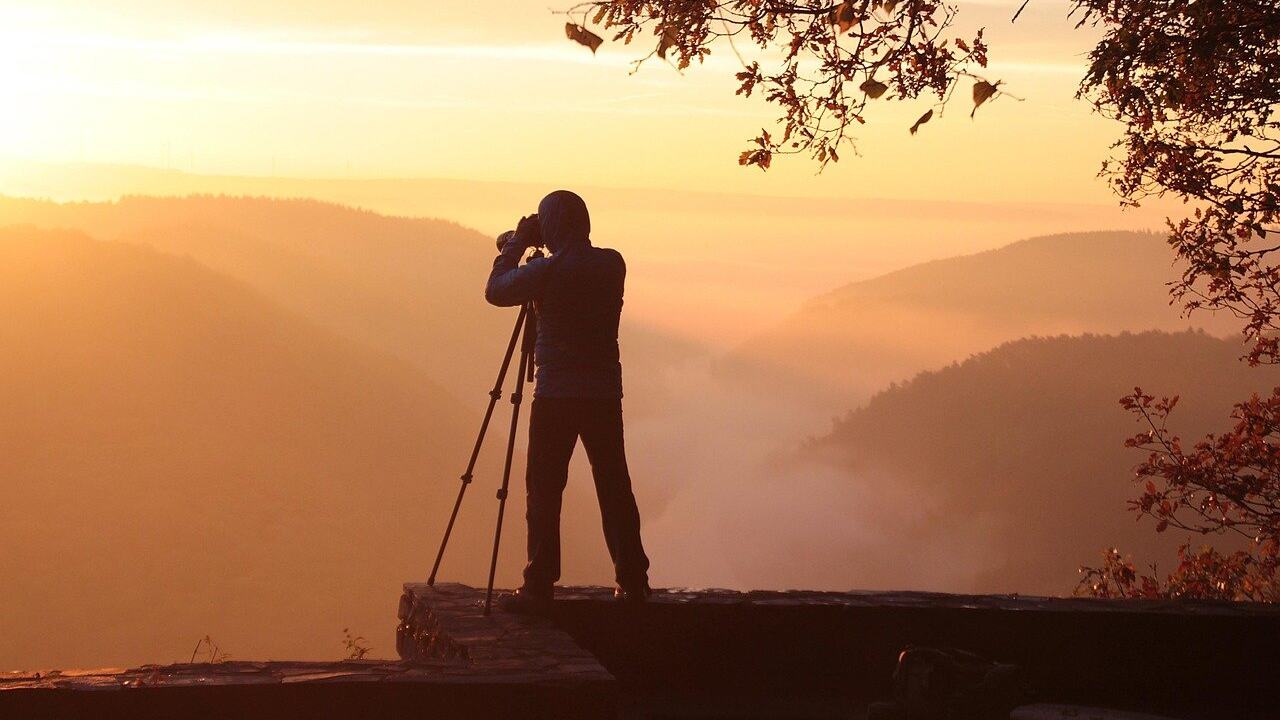
Another photographer says most areas will be around 300-400 meters in height and that catching sunrise or sunset means trekking up to the higher points of the dunes. This suits fit travellers who can carry a camera and tripod uphill. If you cannot climb, shoot from the base, where the dune ridge becomes your foreground line. Whichever you choose, start the climb before the sun reaches the horizon, not as it does.
Yolyn Am: the narrow gorge
In Yolyn Am, written Yoliin Am Gorge by Nomadasaurus, drivers had to pass through a narrow rock slit. That slit is the subject: a tight, enclosed scene that contrasts with open dunes. It suits photographers who like texture, shadow and confined compositions, and it is a daytime stop rather than a sunrise-or-sunset destination.
The same source describes Gobi Gurvan Saikhan National Park, known as the Three Beauties of the Gobi, as a large nature reserve that is lush and captivating. Use it for a gentler, greener change from the dunes. If water-side subjects interest you, the guide to an oasis in the gobi desert covers where life gathers in this landscape.
Ger camp: foreground for the night sky
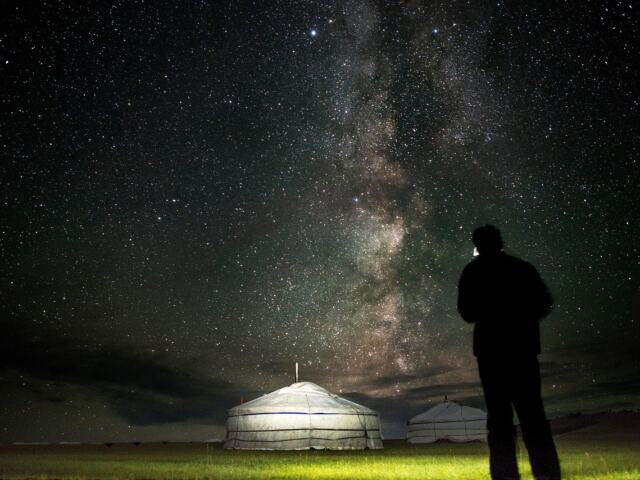
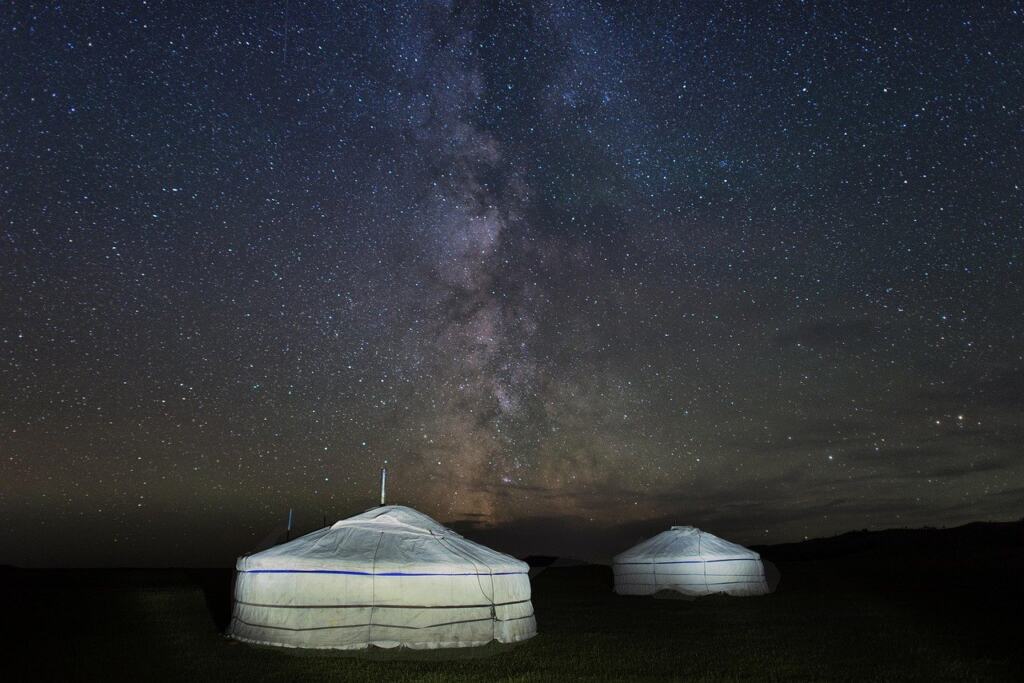
A ger camp gives a night-sky frame something human to sit under. The dark ground around a camp lets a ger become a simple silhouette against the stars. It suits photographers who want an atmospheric rather than purely scenic image. Ask before photographing anyone, and keep headlamps and torches off the frame during exposures, since a stray light will wash out the sky.
Site comparison at a glance
| Site | Best light | Standout feature | Planning use |
|---|---|---|---|
| Flaming Cliffs | Sunrise or sunset | Cliff face with listed coordinates | Check the sunrise and sunset times for your date and arrive early |
| Khongoryn Els | Sunrise or sunset from a high dune | Dunes up to 800 m high | Pick a climbing route before dark and carry only essential kit |
| Yolyn Am | Daytime stop | Narrow rock slit in the gorge | Frame the slit tightly and keep a wider lens for context |
| Ger camp | After dark | Dark skies around the camp | Use the camp as a foreground for the Milky Way |
Figures draw on Nomadasaurus and Mona Juma Photography.
Sunrise and sunset times by season
The best light falls at the start and end of the day, so the clock decides how much time you have. These Flaming Cliffs times from Maplogs show how widely the day length swings through the year. Other Gobi sites will differ, so check each location’s own times.
- Midwinter (1 Jan 2026): sunrise 8:41:29 AM, sunset 5:36:47 PM, daylight 8h 55m 18s. A short day keeps sunrise and sunset shoots close together, so a single base can serve both.
- Spring (20 Mar 2026): sunrise 7:12:34 AM, sunset 7:16:11 PM, daylight 12h 3m 37s. This gives a balanced day, with reasonable time between the two shoots.
- Midsummer (21 Jun 2026): sunrise 5:22:46 AM, sunset 8:52:57 PM, daylight 15h 30m 10s. Expect an early start and a late finish, which leaves little darkness for night work.
- Autumn (27 Oct 2026): sunrise 7:35:36 AM, sunset 6:04:52 PM. Sunset comes early enough to follow with a night-sky session the same evening.
Because the Gobi’s clear skies give strong light at the edges of the day, build your schedule around these windows. A visit to Khongoryn Els that needs a climb in the dark will be easier in the longer days of summer than in midwinter.
Milky Way and night-sky photography
The Milky Way is a realistic target in the Gobi because the desert is dark. One photographer calls the dark desert a haven for astro photographers, with the Milky Way and constellations visible, and says light pollution in this area is nearly non-existent. For gobi desert milky way shots, the deciding factor is darkness, not a particular spot.
Start shooting after sunset for your date, using the times above, and give your eyes and camera time to settle. Choose a ger camp or a dune ridge as your foreground, and check an almanac for the moon phase and the Milky Way’s position on your travel dates.
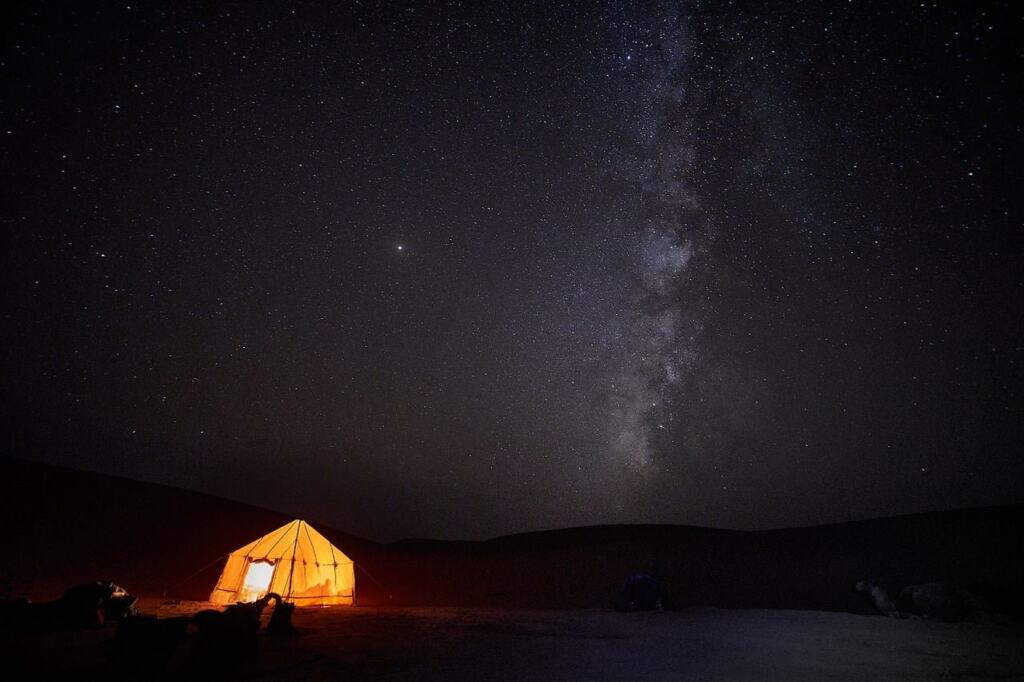
If you prefer a camp-style scene with more warmth, a lit shelter can stand in for a ger as the foreground. Place the light source low in the frame so the sky stays the subject.
Protecting your camera from sand
Wind-blown sand is the main hazard to camera gear on dunes. Keep a cover over the camera and lens whenever you are not shooting, and carry the kit in a closed bag between locations.
- Change lenses in shelter: do it inside a vehicle or bag, not in open wind, so grit does not reach the sensor.
- Blow before you wipe: clear loose sand with a blower, since wiping dry grains across glass can scratch it.
- Pack light for climbs: because reaching high dunes means trekking up, carry only the body, one or two lenses and a tripod.
Follow your camera maker’s own care guidance for cleaning and weather protection, as it differs between models.
Frequently asked questions
Do I need a tour to photograph the Gobi?
Nomadasaurus says the Gobi is best explored as part of a tour. A tour handles the long distances between sites, though it can limit how long you stay for a given light.
Is the Gobi all dunes and bare ground?
No. The same source describes Gobi Gurvan Saikhan National Park as lush and captivating, and a gorge such as Yolyn Am offers a narrow rock passage. Mixing these with the dunes gives a more varied set of images.
What do nomad families offer visitors at a ger camp?
According to Nomadasaurus, visitors dropping in are always offered milk tea, bread, cheese and curds. Accept the hospitality before pulling out a camera, and ask before photographing anyone.