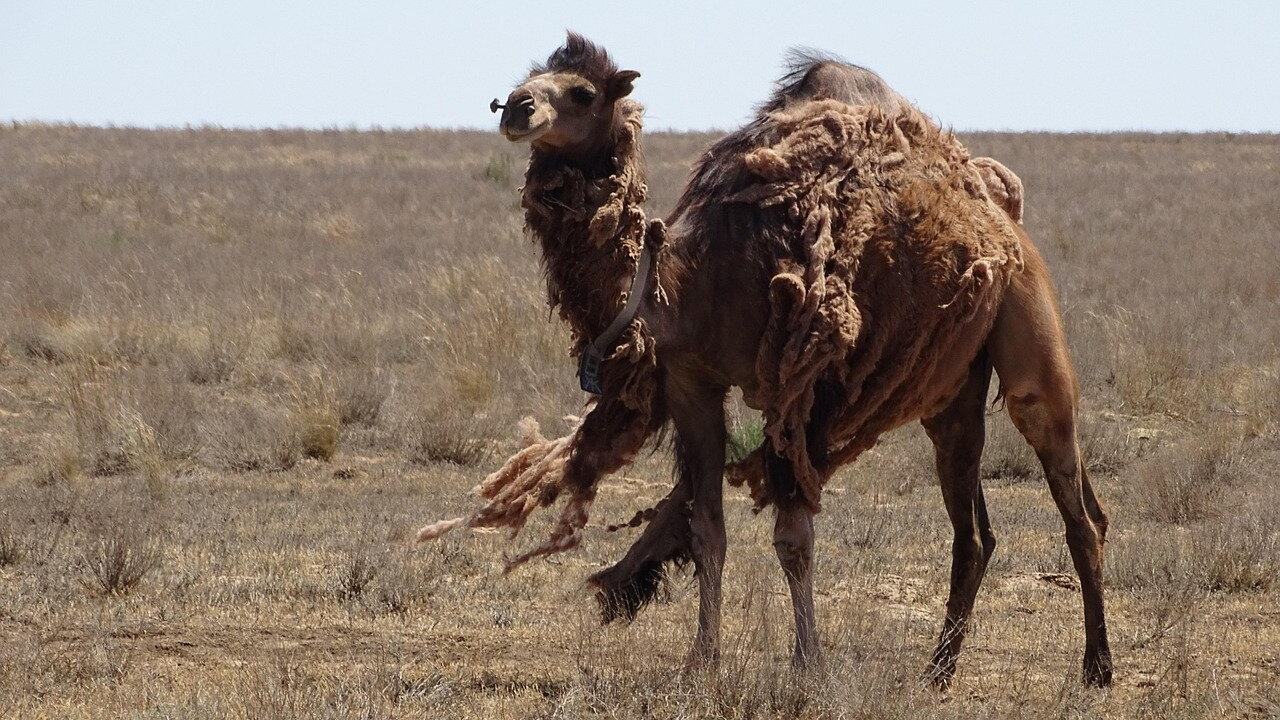
Seeing gobi desert camels for the first time, count the humps: the Bactrian camel has two, while the one-humped dromedary belongs to other deserts. In the Gobi, Bactrians come as both wild and domesticated types.
This ranked guide orders the adaptations by how much they help a camel get through Gobi extremes. It then sets the Bactrian beside the dromedary and separates the wild animals from the domestic ones. For wider regional background, start with our gobi desert facts guide, and see gobi desert animals for the other species you might meet.
Bactrian camel adaptations, ranked by survival value
The order below is an editorial judgement. An adaptation ranks higher the more it lets a camel keep going when food and water are scarce. Each item notes what it does and where its limits lie. Everything described here is drawn from the PBS Nature camel fact sheet unless another source is named.
Fat-storing humps
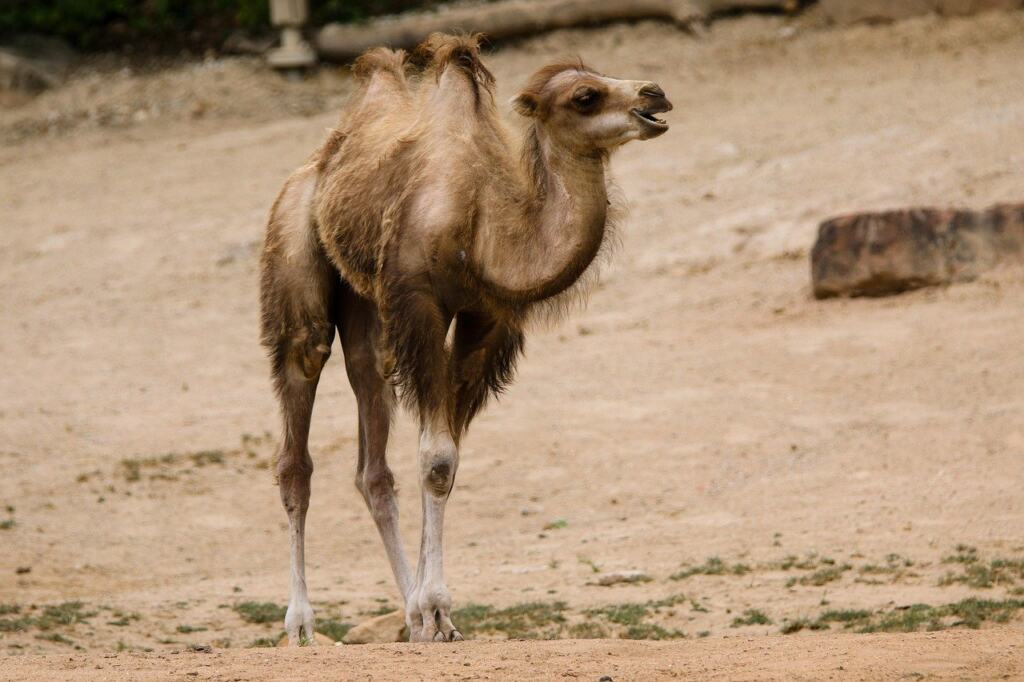
The humps rank first because they are the camel’s energy reserve. A Bactrian camel has two humps, and they store fat that can later be used as an energy source. They do not hold water, which is a common misunderstanding.
The humps also act as a visible gauge of condition. Their size changes with the amount of food the animal eats, and they droop when food is scarce. A firm, upright pair points to a well-fed animal, while a slack pair points to one that has been drawing on its reserves.
How long the stored fat lasts depends on the climate and on the animal’s activity level. No single survival figure fits every camel, and a working animal in harsh weather will burn through its reserves differently from one at rest.
Long gaps between water and food
Endurance ranks second because it is what the fat reserve makes possible. According to the same fact sheet, a camel can survive for over a week without water and for several months without food.
Treat those figures as a general camel ability, not a promise for any one animal. They are not a reason to push a working camel to its limit, because the fat-reserve timing above still depends on climate and activity.
Tolerance of harsh forage and salty water
Third comes the ability to use food and water that other animals could not. Camels have tough but flexible lips that let them break off and eat vegetation such as thorny plants. That widens the range of Gobi plants a camel can use.
The wild animals show the same toughness in their water sources. Wild camels in Mongolia’s Gobi seek out scarce springs of water that are saltier than seawater. For a wild camel, drinking from such a source is part of daily life, and that is a good reason to rank this adaptation above the sand defences.
Sand defences: eyelashes and nostrils
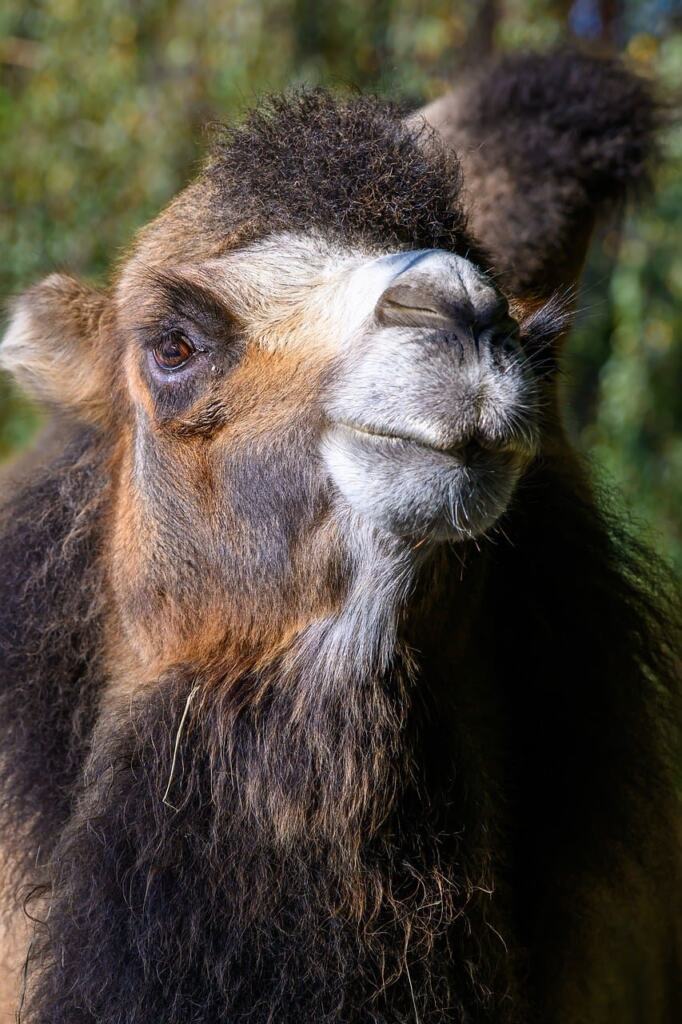
Last in the ranking, though still important, are the features that keep sand out. Bactrian camels have double rows of extra-long eyelashes that help keep sand out of the eyes. They can also close their nostrils to keep sand out.
These features do not feed the animal, which is why they sit lower. They protect the eyes and airways, so the camel can keep moving and grazing when sand is in the air.
Bactrian camel vs dromedary
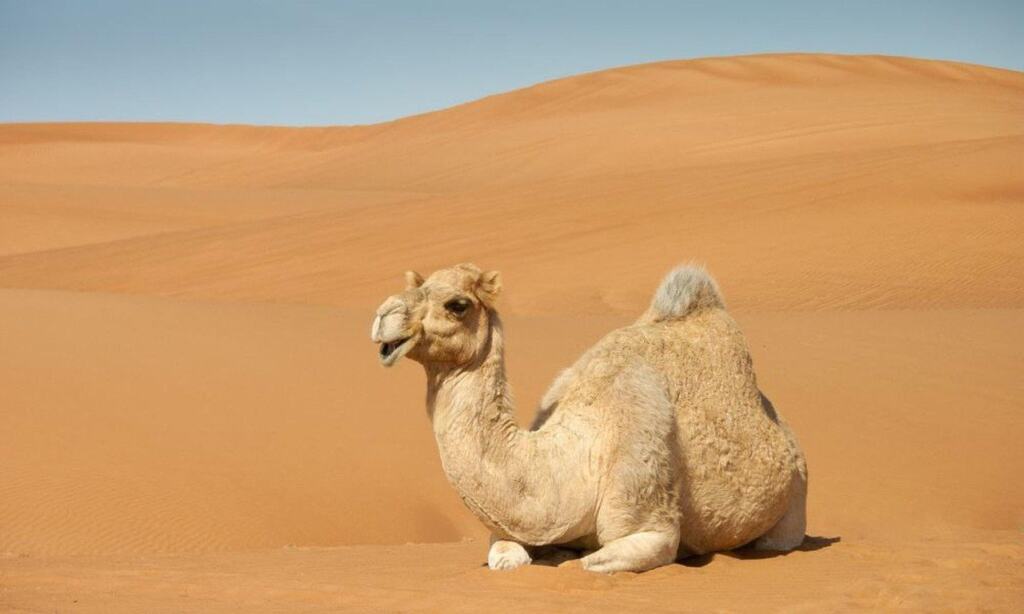
There are two camel species: the Bactrian camel (Camelus bactrianus) and the dromedary (Camelus dromedarius). Humps separate them most reliably. Size helps less than most people expect, as the table shows.
| Feature | Bactrian camel | Dromedary | Planning use |
|---|---|---|---|
| Humps | 2 | 1 | The fastest field check, and the first thing to look at. |
| Height at the shoulder | 5.2 to 5.9 ft | 5.9 to 6.6 ft | The Bactrian is the shorter animal, but the ranges are close, so use height only as a second check. |
| Body weight | 990 to 1,100 pounds | 880 to 1,320 pounds | The Bactrian range sits inside the dromedary’s, so weight will not identify an animal. |
| Where domesticated animals are found | Native to the Gobi Desert in China and the Bactrian steppes of Mongolia | Desert areas in North Africa and the Middle East | In the Gobi, expect Bactrians. |
Figures are from the PBS Nature camel fact sheet.
For identification, trust the humps and treat everything else as supporting evidence. Because the Bactrian weight range sits inside the dromedary’s, a heavy camel could be either species. A shoulder height near the low end of the table points to a Bactrian, but it is the hump count that settles the question.
Wild and domestic Bactrian camels in the Gobi
There are two types of Bactrian camel: wild and domesticated. That distinction matters more for the Gobi than the Bactrian-dromedary split does, because the two types live very different lives even though they share a species name.
Wild Bactrian camels
Yes, there are wild Bactrian camels in the Gobi. The species is native to the Gobi Desert in China and the Bactrian steppes of Mongolia, and the wild type is the one that travels to those scarce, salty springs. Readers who want a book-length account can look to the IUCN library, which lists John Hare’s The king of the Gobi: the story of the wild Bactrian camel, published in 2002 by the Wild Camel Protection Foundation and indexed under the Gobi Desert in China and Mongolia.
If you hope to see wild camels, plan around the water. Their reliance on rare springs ties them to particular places, which is a different problem from simply seeing camels. Seasonal timing is covered in our best time to visit gobi desert guide.
Domesticated Bactrian camels
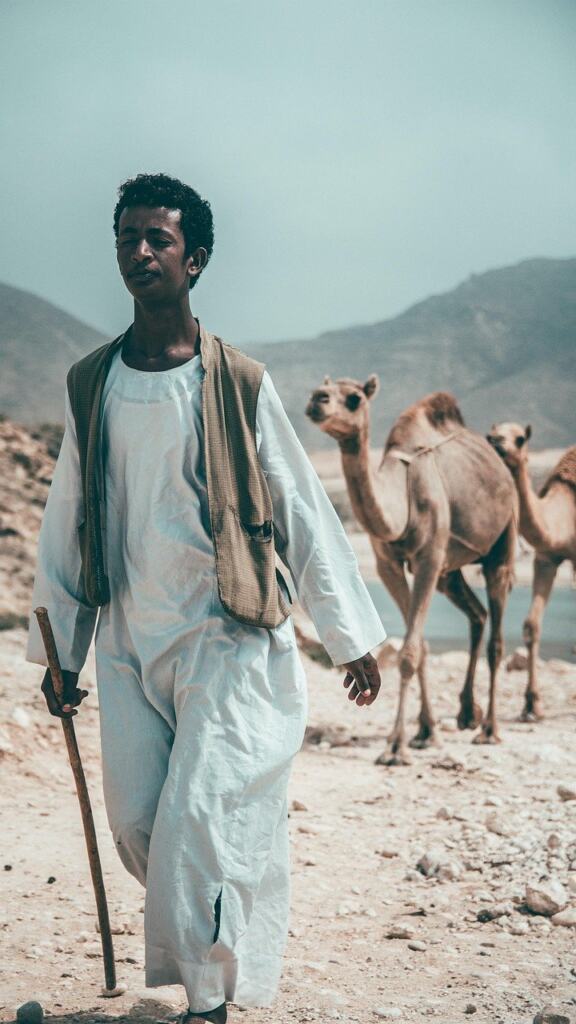
Domestic Bactrians are the camels most visitors actually meet. They provide humans with food, in the form of milk and meat, and with textiles, in the form of fiber and felt made from their hair. For a visitor, that makes a herd with a herder far more likely to be domesticated than wild.
The adaptations ranked above apply to both types, since both are Bactrians. What differs is how much choice the animal has: a domestic camel depends on its keeper for the timing of food and water, while a wild one must find its own.
Quick checklist for identifying a camel
- Count the humps. Two means Bactrian and one means dromedary.
- Look at the setting. Camels tended by a herder are the domesticated type, while the wild type is the one that seeks out remote springs.
- Judge the hump firmness. Upright humps suggest a well-fed animal, and drooping ones suggest food has been scarce.
- Use size last. Height barely separates the species, and weight does not separate them at all.
Frequently asked questions
Are baby camels born with humps?
No. A newborn camel is born without humps, but small peaks hide beneath a tassel of curly hair, and the humps develop from there.
How long do camels live?
The median life expectancy for camels is 17.8 years, according to the PBS Nature camel fact sheet.
Are most camels in the world Bactrians?
No. About 90% of the world’s camels are dromedaries, also known as Arabian camels, so the two-humped Bactrian is the less common species.