| Pressure | What the Gobi presents | Documented response | Planning use |
|---|---|---|---|
| Elevation and cold | A cold desert at around 1500 m above sea level | Species must cope with cold seasons as well as heat | Read every adaptation as a two-season problem, not only a heat problem |
| Temperature swing | Winter below -40°C; summer highs over 40°C | Jerboas are nocturnal and burrow quickly | Look for night activity and burrows before anything else |
| Rainfall | Roughly 7.6 in. (about 193 mm) a year, mostly in winter; as little as 25 mm in some areas | Jerboas rarely drink and get most moisture from food | Treat food as a water source when judging a species |
| Drought and salt | Scarce rain and long dry spells | Wild Bactrian camels survive on salty water and endure long droughts | Count salt tolerance as a water strategy in its own right |
| Distance | Water and grazing are spread widely | Khulan herds roam vast distances for both | Range is an adaptation; a species that can travel needs open ground |
| Sparse food | Few plants and small prey | The Gobi bear survives on roots, berries and the occasional rodent | A flexible diet is the bear’s strategy for lean years |
Figures come from Wildlife Nomads’ guide to Gobi animals and Nomadic Expeditions’ overview of Gobi ecosystems.
Gobi desert animal adaptations solve three problems: scarce water, summer heat and winter cold. Animals do it by drinking little, using burrows and night activity, and travelling for water, so every strategy is shaped by the desert’s scarce rain.
This guide explains those mechanisms species by species. For the wider cast of animals and where they live, start with our overview of gobi desert wildlife.
Temperature swings and thin rainfall
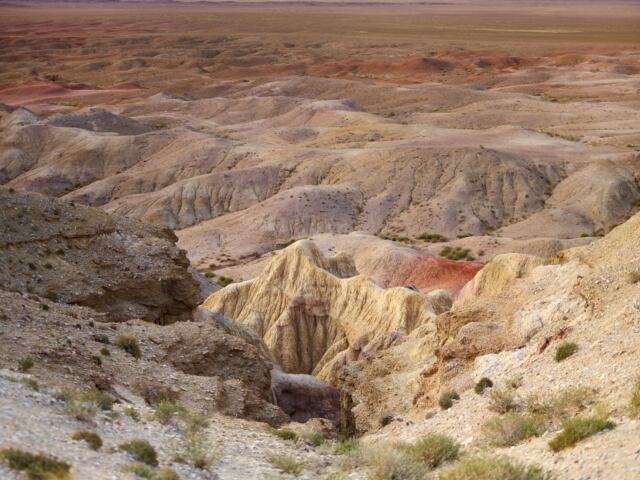
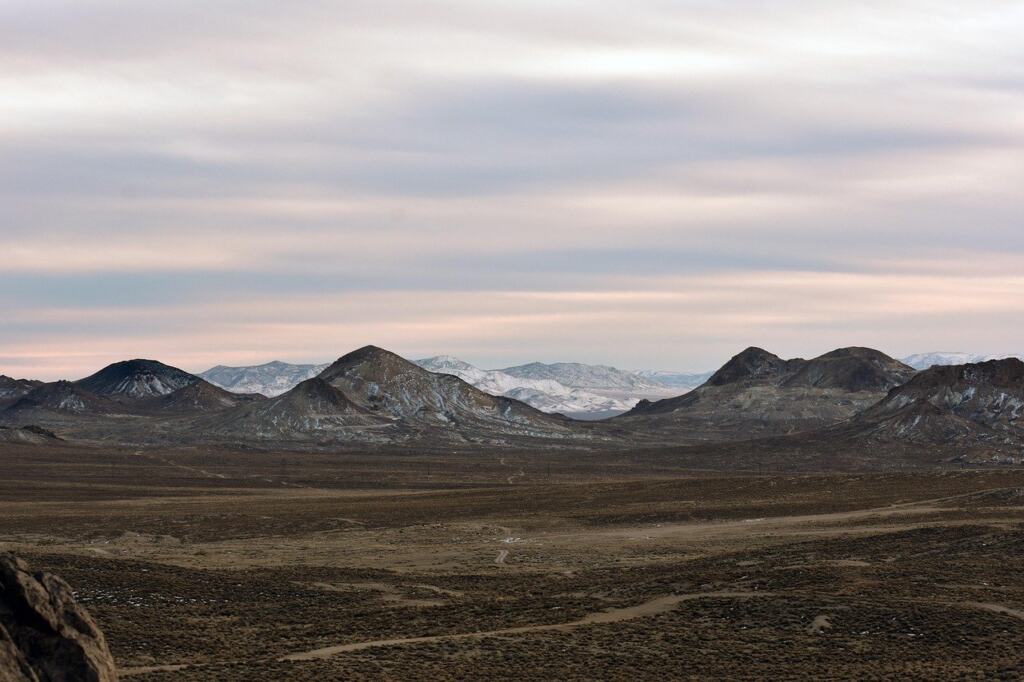
The Gobi’s cold matters as much as its heat. Nomadic Expeditions describes it as a cold desert, situated high up at around 1500 m above sea level. Wildlife Nomads reports winter temperatures that can fall below -40°C and summer highs that can pass 40°C.
Rain is just as limiting. Roughly 7.6 in. (about 193 mm) falls in a year, most of it in winter, and some areas receive as little as 25 mm. Because the wettest season is also the coldest, animals cannot count on warm, wet weather to restock their water.
The consequence is that no single trick works all year. A species has to handle a scorching summer day and a deep winter night on very little water, which is why behaviour often matters as much as anatomy. The jerboa, for example, is nocturnal and burrows, so it spends daylight hours away from the open surface.
Finding water when almost none falls
Gobi animals get water through food, tolerance and travel rather than through regular drinking. Which route a species takes decides where it can live and how exposed it is when conditions worsen.
- Moisture from food. The jerboa rarely needs to drink and gets most of its moisture from what it eats. This suits animals that can reach food every night without crossing open ground to a waterhole.
- Tolerating poor water. The wild Bactrian camel can survive on salty water and endure long droughts, so it is not limited to fresh springs.
- Travelling to water. Khulan live in herds that roam vast distances in search of water and grazing land. This is a good strategy only where the landscape stays open and connected.
- Plant stores. Saxaul has bark that holds moisture, and nomads crossing the desert treat it as an important water source, a reminder that plants hold water the desert’s people and herbivores also rely on.
The Bactrian camel’s sand and drought kit
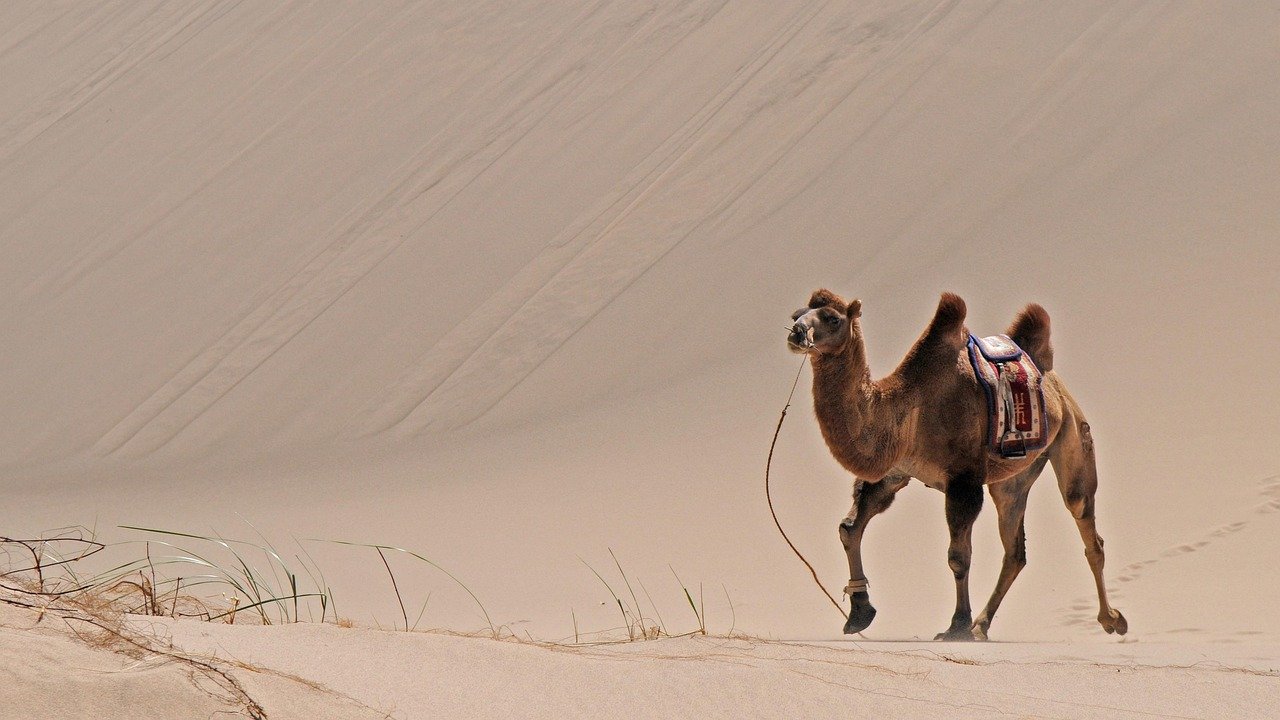
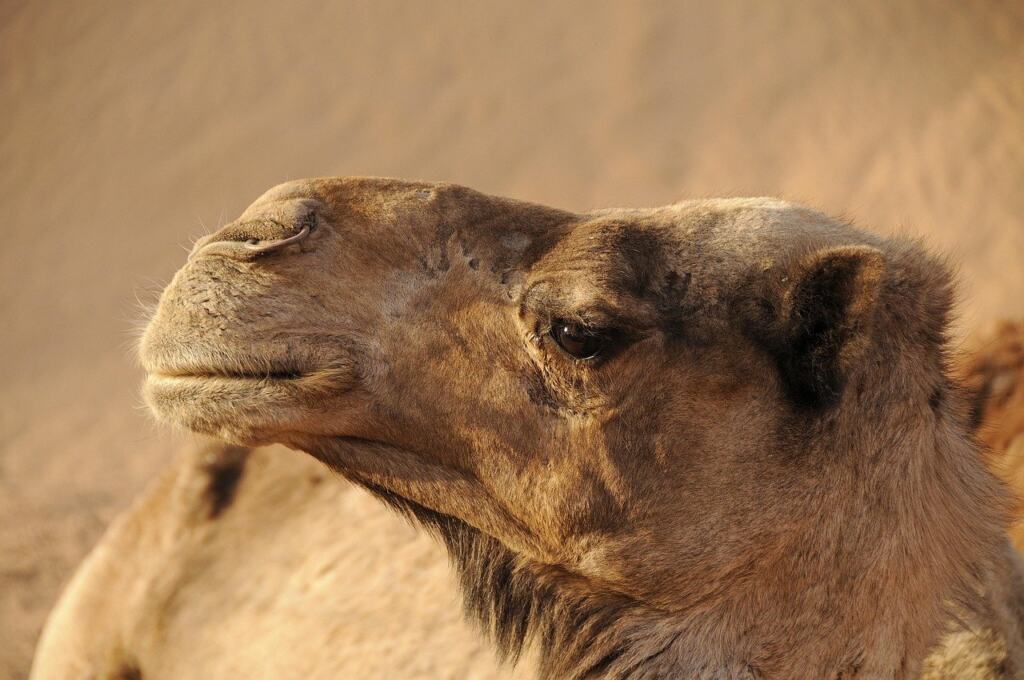
The wild Bactrian camel is built for moving across loose ground and surviving blown sand. According to DesertUSA, it has feet with broad toes and undivided soles, which help it walk in desert sand. It also has long eyelashes and sealable nostrils, which help it cope with intense sand storms.
These features protect the openings that wind-driven grit reaches first and spread the animal’s weight over soft ground. Together with its tolerance of salty water and long droughts, they let it use places where other large mammals would struggle to stay for long.
Burrowing and night activity
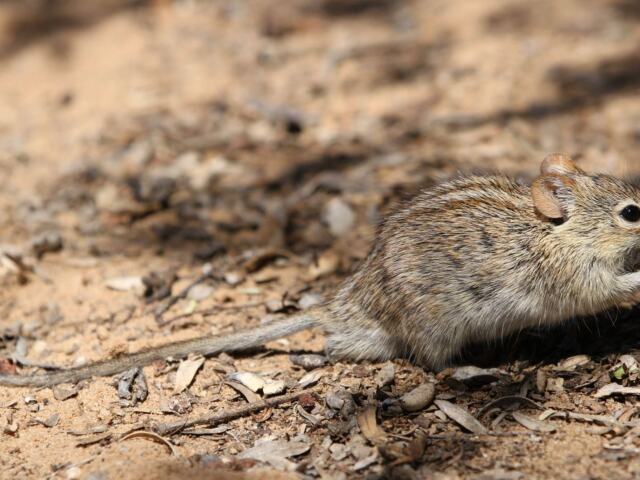
The jerboa shows how a small animal turns behaviour into protection. It is a nocturnal rodent that hops through the desert and avoids predators by zig-zagging and burrowing quickly. A burrow is both an escape route and a place to be out of the surface conditions.
Its body supports the habit. DesertUSA notes that its back legs are five times longer than its forelegs, and that in sandy soil it can jump as much as 10 feet. Long hops across soft ground, a short dash and a quick dive underground make a compact escape routine.
- Choose burrowers for refuge. If the question is where small desert animals go when the surface is dangerous, the jerboa’s burrow is the documented answer.
- Choose nocturnal species for heat avoidance. Night activity is the habit that moves a species away from daytime conditions on the open surface.
- Do not assume every animal burrows. Camels and khulan rely on size, range and tolerance instead.
Roaming and broad diets: khulan and the Gobi bear
Not every Gobi survivor hides or stores water. Khulan, known locally by that name, are one of the fastest mammals in Asia. Speed and herd movement let them reach scattered water and grazing, which is a different answer from the jerboa’s.
The Gobi bear takes the opposite route and stays flexible about food. Wildlife Nomads says it survives on roots, berries and the occasional rodent. It reports adult males typically weigh 96.0 to 138.0 kg and females 51.0 to 80.0 kg, while Nomadic Expeditions puts adults at 100 to 120 kg. A diet that mixes plant matter with small prey lets a large animal keep going when one food source fails.
Both strategies depend on land that stays intact: open ground for khulan, and varied plants and prey for the bear. That is why protected areas such as the great gobi strictly protected area matter for species that cannot simply shelter in a burrow.
Where the adaptations sit in the food web
The Gobi’s food web is built from the same water-saving and heat-avoiding habits. Nomadic Expeditions lists insects, lizards, rodents, tarantulas, scorpions, snakes, hawks and black-tailed gazelles among its members, and the wider gobi desert ecosystem ties them together.
Small animals that get moisture from food and escape underground carry energy upward. The Gobi bear eats the occasional rodent, so water-thrifty small species feed larger ones. Wildlife Nomads adds that snow leopards keep herbivore populations such as gazelles and marmots in check, and that marmots play an essential role as prey and soil aerators.
The practical reading is that no adaptation stands alone. A drought-tolerant herbivore, a burrowing rodent and a predator that waits for either all depend on the same scarce water, so a change that affects one tends to be felt by the others.
Frequently asked questions
How does a Bactrian camel cope with salt water?
Wild Bactrian camels can survive on salty water and endure long droughts, according to Wildlife Nomads. That tolerance lets them use water that many other animals could not rely on.
Which animals hibernate or burrow?
The documented burrower here is the jerboa, which dives underground to escape predators. The Gobi bear is described through its diet of roots, berries and occasional rodents rather than through a hibernation pattern.
How rare are wild Bactrian camels and Gobi bears?
Wildlife Nomads lists the wild Bactrian camel as Critically Endangered on the IUCN list, with fewer than 1,000 left in the wild. It estimates fewer than 40 Gobi bears survive.
How big is a wild Bactrian camel?
It is a shaggy animal that may weigh a ton or more.