A two-humped camel in the Gobi is not automatically a wild one: the bactrian camel gobi desert story includes a familiar domestic animal and a critically endangered wild species living in isolated pockets.
The quick answer is that wild and domestic Bactrian camels are separate populations with different fates, and both rely on the same physiology to cope with extreme heat, cold and thin water supplies. This guide corrects the most common misunderstandings and sits within our wider coverage of gobi desert wildlife.
Wild camels are not escaped domestic ones
The most persistent mistake is assuming that any free-roaming camel in the Gobi is a domestic animal that wandered off. Conservation group Edge of Existence reports the opposite: genetic work points to wild camel herds being relicts of an original wild stock, the same stock that people first domesticated over 4000 years ago. Each wild skin sample showed two or three distinct genetic differences from the domestic Bactrian camel, with a base variation of three per cent between samples.
In practical terms, the wild camel (the wild form of Camelus bactrianus) is a surviving lineage rather than a feral herd. That matters for conservation, because the animals have no replacement stock in a field somewhere. The domestic Bactrian camel remains plentiful as a working and milk animal, while the wild one is not.
| Aspect | Wild Bactrian camel | Domestic Bactrian camel |
|---|---|---|
| Origin | Relict of the original wild stock | Descended from stock first domesticated over 4000 years ago |
| Genetics | Two or three distinct genetic differences per skin sample compared with domestic camels | The reference population for those differences |
| Conservation status | Described as critically endangered | Kept by herders as livestock |
| Water | Adapted to drinking salt water slush in some areas | Watered by people at wells and troughs where herds are managed |
| Main pressure or role | Wolf is the main enemy in the Mongolian Gobi; hunting continues | Camel milk is a staple food of the region |
The comparison draws on Edge of Existence for the wild species and on a Gobi camel feature for the milk staple.
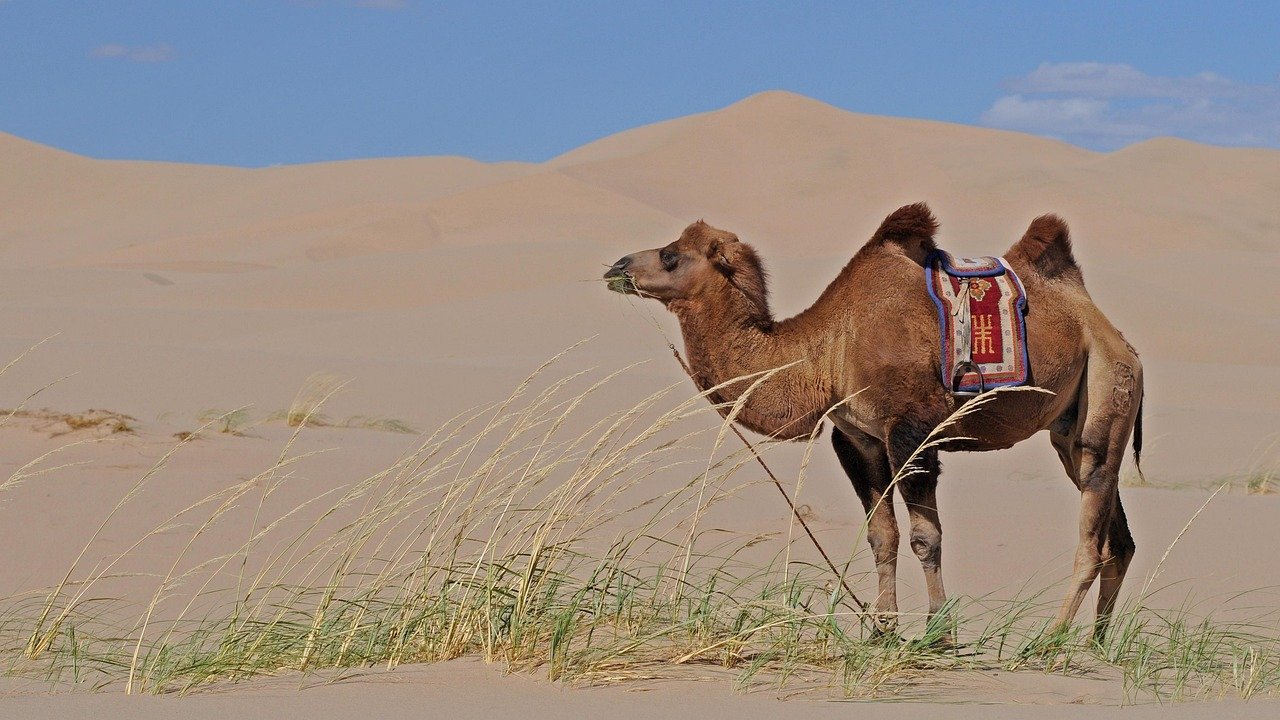
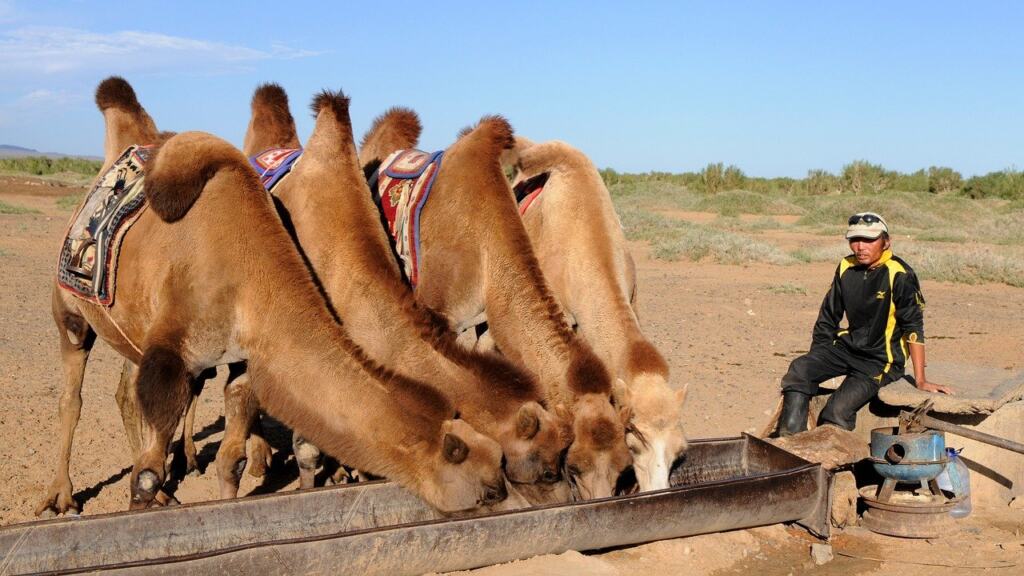
Appearance alone will not settle which animal you are looking at. A camel standing beside a herder, wearing a halter or carrying a load is domestic. Wild herds are shy animals of remote desert, and an unmarked camel near a settlement is more likely to belong to someone than to be wild.
Hybridisation blurs the line
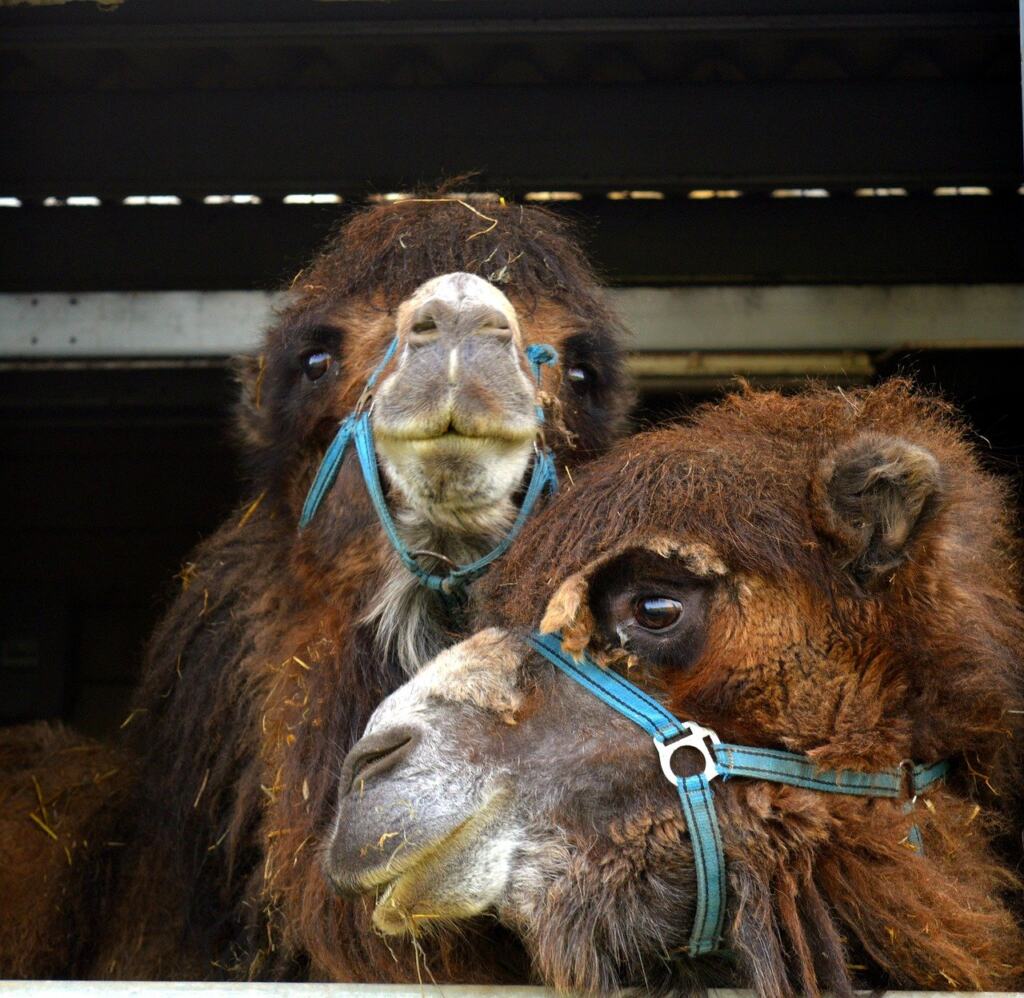
The two populations are not fully separate in practice. A conservation assessment published by IOS Press lists the effects of hybridisation with domestic camels in both Mongolia and China among the causes of the wild camel’s decline. Keeping domestic and wild animals apart is therefore part of protecting the wild lineage.
Humps: what they tell you and what they do not
The Bactrian camel is defined at a glance by its two humps, whereas dromedary camels have just one. The dromedary is the camel of semi-arid to arid regions of northern Africa and the Arabian Peninsula, according to the same Gobi camel feature, so a camel in the Gobi is a Bactrian.
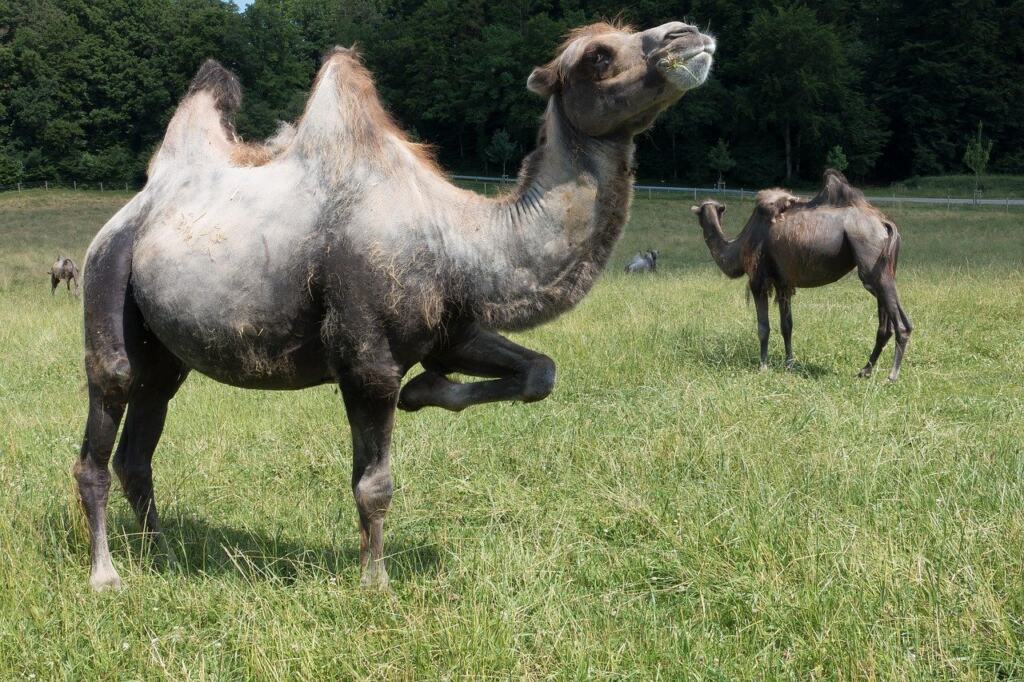
The hump count identifies the species, but it does not separate wild from domestic. Both wild and domestic Bactrian camels carry two humps. The traits that decide survival in dry country are mostly internal, covered in the next section.
How Bactrian camels survive in the desert
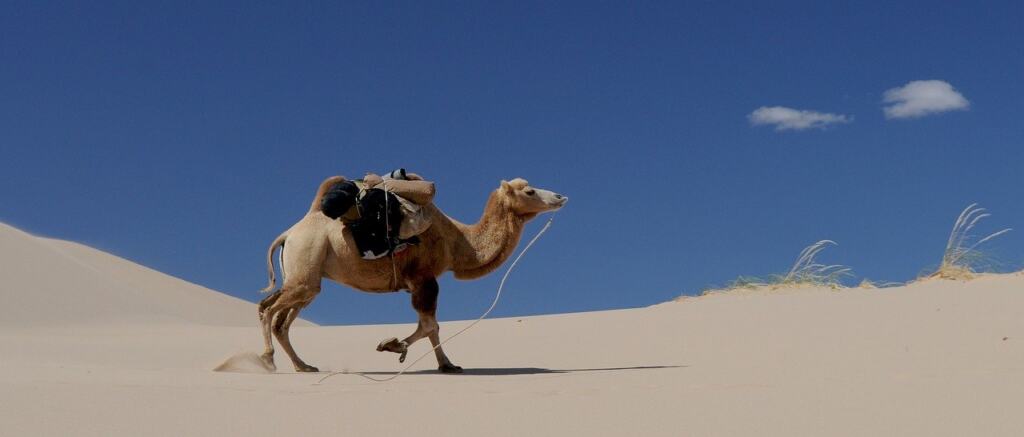
Bactrian camels survive the Gobi by tolerating conditions that would harm most mammals, rather than by avoiding them. The Gobi in southern Mongolia is quoted as reaching -40 °F in winter and 113 °F in summer, and the camel’s body copes with both ends of that range.
Heat and water loss
Camels can tolerate an internal temperature increase of 6 degrees Celsius before perspiring, which limits the water lost to sweat. They can also go for weeks without water and tolerate a water loss equal to 30% of body weight, while 15% kills most mammals, according to the Gobi camel feature. The useful takeaway is that a camel’s endurance comes from letting its body run hotter and drier than other animals can, not from a store of drinking water.
Salt, sand and wind
Water quality is as much a problem as water quantity. Edge of Existence says the wild camel has adapted to drinking salt water slush which no other mammal can tolerate, which lets it use sources that other animals cannot. The same species also copes with wind-blown sand: a double row of long eyelashes blocks harsh winds, and the nostrils close against dust.
Do not read a herder-managed trough as a natural water source. Domestic herds are watered by people, whereas the wild camel’s salt-slush adaptation applies to animals living without that help.
How many wild Bactrian camels remain
Only a small number remain, and the trend has been downward. A 2007 report cited by Edge of Existence puts the Mongolian population at approximately 450 wild camels in the Great Gobi Reserve, with approximately 650 additional camels further south in Xinjiang Province, China, in three isolated pockets. These are the figures as reported in 2007, not a current count.
The trend in the IOS Press assessment is more worrying than any single count. It reports that the Mongolian subpopulation had declined by 46% since 1985 and projected, in 2005, a reduction of 80% within the next three generations. It also notes that the population is the target of continued hunting. Hybridisation with domestic camels and predation by wolves add pressure, as the sections above explain.
The conclusion for readers is that the wild camel is rare enough that sightings should never be promised. Its range is now limited to isolated regions of the Gobi and Taklamakan Deserts of Mongolia and Xinjiang.
Where to see wild camels in Mongolia
The realistic place to look is the Great Gobi Strictly Protected Area in southwestern Mongolia, which Edge of Existence calls the Mongolian Great Gobi Reserve. It holds the Mongolian population reported above. Because the animals live in a protected area and in small herds, check access arrangements with the protected-area authorities before planning a trip around them.
Wild camels typically live in herds of 6-20 members. They also move with the seasons: during the snowy winter months they migrate to the Gobi desert steppe and return to the desert when the snow melts in spring. A trip should allow for that movement rather than assume the herd stays at one spring.
If your goal is simply to see Bactrian camels, domestic herds are the practical choice. They are part of herding life across the region, and camel milk is a staple food there. Treat any such encounter as a domestic sighting, not a wild one.
The Gobi has other rare animals worth learning about. The gobi bear is one, and elsewhere in Mongolia the guide to snow leopard mongolia covers a very different species.
Frequently asked questions
| Question | Answer |
|---|---|
| How long do wild Bactrian camels live? | They have been known to live as long as 50 years in the wild, with an average of 30 years in the wild, according to Animal Diversity Web. |
| How big is a Bactrian camel? | Adults weigh 300-690 kg and stand 1.80-2.30 m tall at the shoulder, according to the same species account. |
| What do Bactrian camels eat? | They thrive on desert vegetation, including salty, dry, thorny and bitter plants. They also eat the saxaul shrub and help spread its seeds, according to Animal Diversity Web and a Gobi camel feature. |
| What is the main natural enemy of the wild camel? | In the Mongolian Gobi the main enemy is the wolf, according to Edge of Existence. |